
Smile Makeover Aftercare Tips for Chicago Patients
Smile makeover aftercare protects your veneers, crowns, and bridges. It lowers stress on the teeth and helps catch problems early. In Chicago, patients should stick to soft foods, brush and floss gently, wear a nightguard if prescribed, and avoid hard or sticky foods. Return for follow-up visits if you notice sensitivity, gum irritation, chips, looseness, or bite changes. Good aftercare helps your new smile stay comfortable, strong, and natural-looking.
Smile makeover aftercare helps your results look good and feel comfortable. The main job is simple: protect porcelain restorations early, keep the mouth clean, and don't ignore fit or comfort changes. With porcelain veneers and zirconia crowns and bridges, the first days matter most because bonding and bite settling can still change.
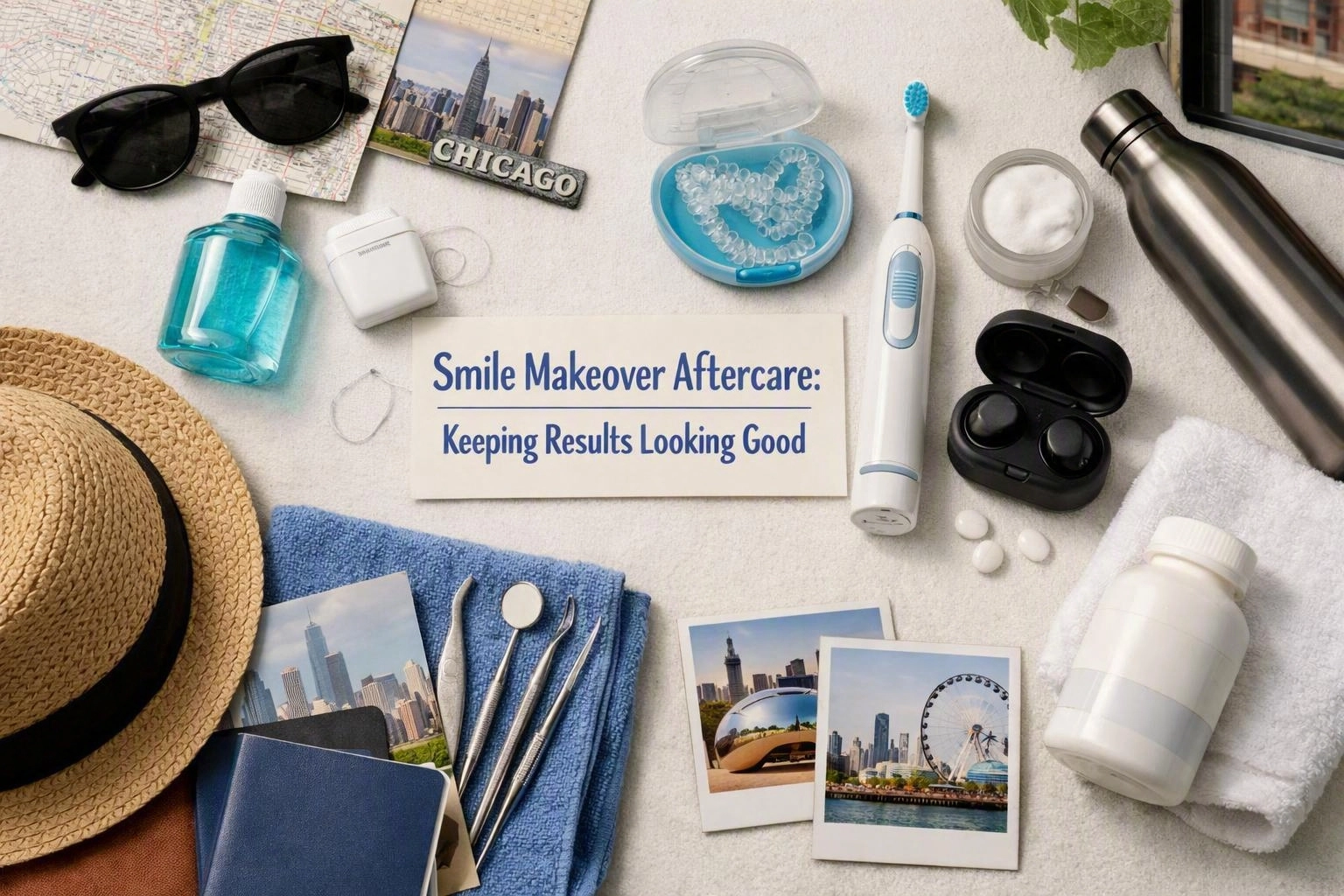
First-day Habits That Protect Veneers, Crowns, and Bridges
A smile makeover aftercare timeline helps patients know what to do at each step. Protect the restorations right away. Ease back into normal chewing during the first week. Check comfort and bite during the first month. Then keep up hygiene and professional monitoring over time so appearance and function last.
| Time period | Maintenance timeline actions | Why it matters |
|---|---|---|
| Immediate | Follow soft-food limits, protect the area from hard biting, and keep to post-operative care instructions. | Reduces stress on porcelain restorations while bonding and tissues settle. |
| First Week | Resume careful chewing, maintain dental hygiene, and note any temporary sensitivity or bite changes. | Helps catch fit issues before they turn into repair work. |
| First Month | Attend the follow-up appointment, confirm the occlusion, and ask about a nightguard if you grind at night. | Supports comfort, protects the margins, and confirms long-term stability. |
| Ongoing | Keep cleanings, plaque control, and regular exams; wear the nightguard as directed and avoid stain-heavy habits. | Maintains stain resistance, function, and restorative dental maintenance over time. |
In Chicago, IL dental follow-up care matters because busy schedules can make missed visits more likely, so early check-ins are worth planning for. Winter dryness and indoor heating can also increase mouth dryness and sensitivity, which makes gentle hydration, careful brushing, and routine monitoring even more important. Coffee, tea, and chewy city foods can also test porcelain restorations, so food choices and a nightguard help protect the work.
Warning signs after a smile makeover include persistent pain, sharp sensitivity, gum swelling, looseness, chips, rough edges, or a bite that feels uneven. These symptoms can signal bonding issues, fracture, or fit problems. They should be checked promptly so the restoration doesn't worsen or fail.
When to Call Your Dentist Versus Waiting for Your Checkup?
Long-term smile makeover aftercare depends on daily plaque control, avoiding habits that crack porcelain, and protecting the restorations from grinding and staining. Regular cleanings, careful flossing around margins, and a custom nightguard when needed help veneers, crowns, and bridges stay bright, comfortable, and useful for years.
For lasting results, treat your new work as part of your restorative dentistry plan, not a one-time fix. Use a gentle oral hygiene routine morning and night, and pay close attention to the gumline where plaque can collect around porcelain restorations. Flossing should be careful, especially around bridge pontics and crown edges, because missed debris can lead to irritation or decay on the supporting teeth.
Stain prevention matters too. Coffee, tea, red wine, and dark sauces can dull the look of veneers and crowns over time, so rinse after meals and keep up with professional cleanings. If you clench or grind, an occlusal guard or custom nightguard can reduce pressure and protect the bite. In Chicago, where winter dryness and indoor heating can leave the mouth less comfortable, hydration and routine maintenance instructions become even more valuable. That steady care helps prevent wear, preserve shade, and keep your smile looking natural.
Frequently Asked Questions
Related Resources
How Much Do All-on-4 Dental Implants Cost in Chicago?
All-on-4 dental implants cost Chicago
What It CostsDental Implant Costs in Chicago: What a Complete Treatment Quote Includes
single dental implant cost Chicago
Compared ToFull-Mouth Reconstruction vs All-on-4: Which Treatment Fits Your Needs?
full mouth reconstruction vs All-on-4 Chicago
How It WorksPorcelain Veneers and Smile Makeovers: Cost, Appointments, and Timeline
porcelain veneers process and cost Chicago