All-on-4 Recovery Time and Aftercare in Chicago, IL
All-on-4 recovery time aftercare usually means the first 3 to 7 days are the hardest. Swelling peaks early, and most patients get back to light routines within a few days. You’ll heal best if you protect the surgical site, eat soft foods, use medicines as directed, and keep your mouth clean. Avoid smoking, straws, and heavy exercise. Final healing takes months, so follow-up care in Chicago really matters.
How Long Does All-on-4 Recovery Usually Take?
All-on-4 recovery time usually starts with 3 to 7 days of soreness, swelling, and soft-food eating. Then it improves bit by bit over the next few weeks. Full implant integration takes several months, so healing has a short part and a long part.
For most people, the first days feel the toughest because the mouth is adjusting to surgery, stitches, and the temporary prosthesis. Bruising, puffy cheeks, and a tight feeling are common. They usually ease as the tissues settle. In full-arch implant recovery, the first goal is comfort, then function, then stability.
Osseointegration is the slow phase where the bone grows around each implant and locks it in place. That process can't be rushed, even when the smile looks finished right away. In Chicago follow-up care, your implant team checks your bite, tissue health, and prosthesis fit so small issues don't slow healing.
Chicago winters and dry indoor heat can leave the mouth feeling drier and more irritated. Many patients do better with extra water and a more humid room during early healing. If getting downtown is hard because of snow or traffic, schedule follow-ups early and keep easy access to post-op support.
What to Do in the First 24 Hours After Surgery?
All-on-4 aftercare in the first 24 hours focuses on stopping bleeding, lowering swelling, and protecting the implant sites. You should rest, use cold compresses, take prescribed medicine exactly as directed, and avoid rinsing, spitting, smoking, drinking through straws, or touching the surgical area.
If you're recovering during a busy Chicago week, plan a quiet day at home before the appointment so you can focus on care. Keep water nearby, set reminders for medicine, and arrange transportation if you don't want to deal with traffic after sedation.
All-on-4 Recovery Timeline: What Happens Day by Day
All-on-4 recovery time follows a clear timeline. Immediate care controls bleeding and swelling. The first week focuses on soft foods and cleaning. The first month brings more comfort, and the long phase protects the implants while osseointegration continues for months.
| Time Period | What You May Notice | Required Actions |
|---|---|---|
| Immediate | Bleeding control, swelling, bruising, numbness fading, and soreness around the full-arch dental implants. | Use gauze, ice packs, rest, and prescribed medication. Protect the temporary prosthesis and avoid pressure on the area. |
| First Week | Swelling often peaks early, then starts to improve. Chewing feels limited, and the mouth may feel tender or tight. | Stay on a soft diet, keep oral hygiene gentle, and attend any scheduled follow-up appointment or implant checkups. |
| First Month | Comfort usually improves, and bruising fades. The gums begin to settle around the prosthesis. | Keep cleaning carefully, avoid heavy chewing pressure, and follow instructions for chlorhexidine rinse if it is prescribed. |
| Ongoing | Implant stability keeps improving as osseointegration continues over months. | Maintain oral hygiene, keep maintenance visits, and watch the prosthesis for wear, looseness, or gum inflammation. |
The first day is about control. The soft-food phase is about protection. The long-term phase is about consistency. In Chicago, follow-up care matters because patients may move between providers, so shared records and clear emergency contact access help keep treatment on track.
What You Can Eat and What You Should Avoid?
A soft diet lowers chewing pressure and protects healing tissues after surgery. Choose cool, nourishing, easy-to-chew foods at first. Avoid hard, crunchy, sticky, spicy, or very hot foods until your dental team says the implants are ready.
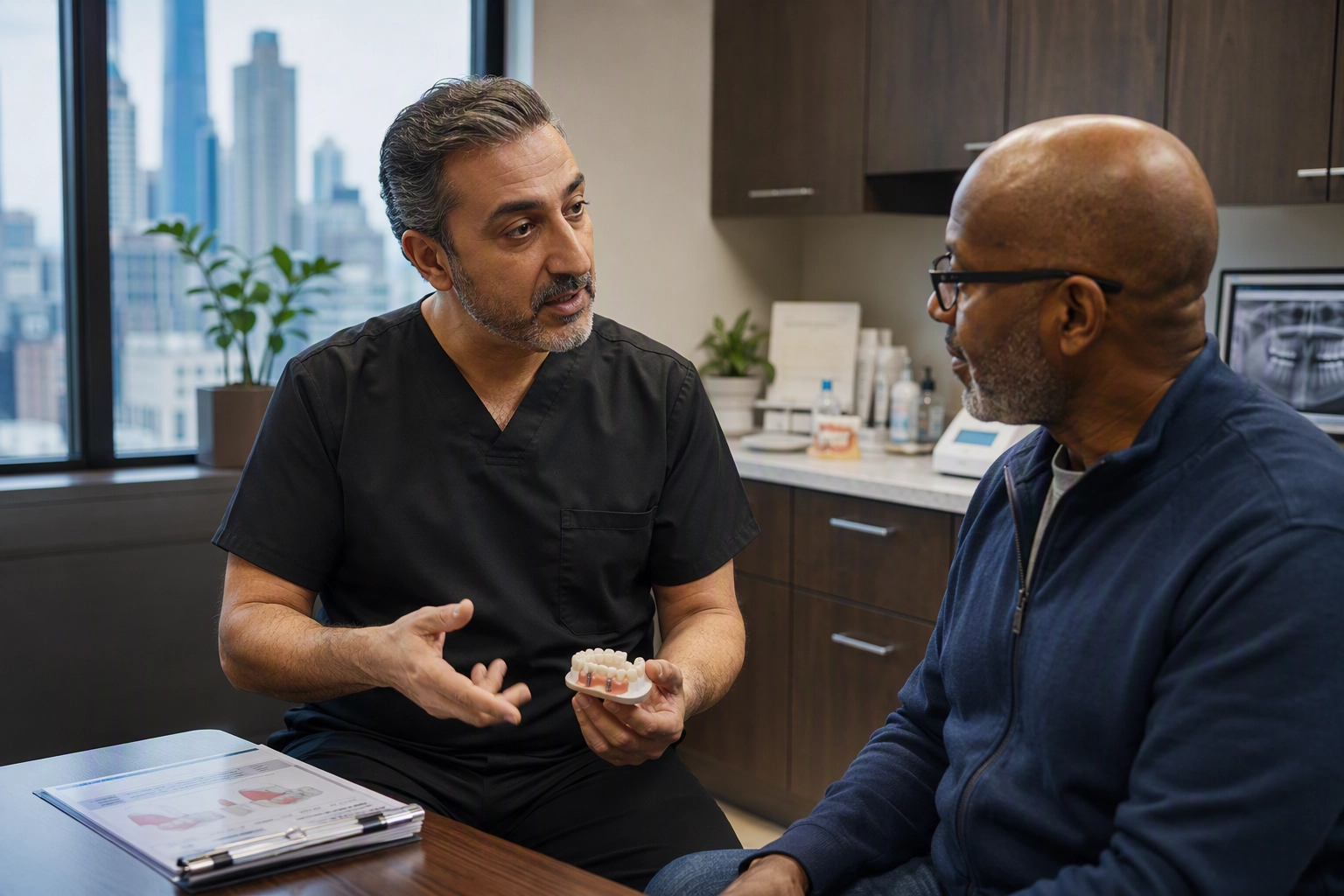
Chicago winter air can make eating and swallowing feel less comfortable. Many patients do better with soups that are warm, not hot, and with more frequent sips of water. That extra hydration can help the mouth stay more comfortable while healing continues.
Warning Signs That Need Prompt Attention
All-on-4 recovery time becomes a concern when symptoms get worse instead of better. Ongoing bleeding, rising swelling, fever, bad taste, pus, strong pain, or a loose prosthesis can signal a problem. Tell your dental team right away if that happens.
Chicago patients should keep emergency contact details easy to find, especially if they compare care across multiple providers. Fast communication helps the implant team decide whether you need reassurance, an urgent visit, or a change in post-operative care.
How to Keep Your Implants Healthy After the First Month?
All-on-4 aftercare continues after the first month with daily cleaning, careful brushing, interdental hygiene, and regular professional checks. Long-term success depends on protecting the prosthesis, managing gum inflammation, and keeping maintenance visits so small problems don't turn into implant failure.
At this stage, oral hygiene becomes a routine instead of a short recovery task. Brush all reachable surfaces with a soft brush, clean under and around the bridge, and use a water flosser if your team recommends it. A water flosser can help remove debris near the gumline and around the temporary bridge or final prosthesis without adding pressure to sore areas.
Maintenance visits matter because the dentist can check implant stability, tighten or adjust parts if needed, and look for early irritation. That matters even more when Chicago patients split care between offices, since steady follow-up helps prevent missed warning signs. If your team prescribes a chlorhexidine rinse at any stage, use it exactly as directed and only for the recommended period.
Long-term implant care should also include avoiding tobacco, managing teeth grinding if it applies, and calling for a follow-up if the bite changes. Full-arch implant recovery doesn't end when soreness stops. It ends when the restoration stays healthy, clean, and stable for years.
Frequently Asked Questions
Related Resources
How Much Do All-on-4 Dental Implants Cost in Chicago?
All-on-4 dental implants cost Chicago
Compared ToFull-Mouth Reconstruction vs All-on-4: Which Treatment Fits Your Needs?
full mouth reconstruction vs All-on-4 Chicago
Compared ToDental Implants Abroad vs Chicago: Comparing Total Cost, Care, and Convenience
dental implants abroad vs Chicago cost
How It WorksThe All-on-4 Dental Implant Process: Appointments, Recovery, and Final Teeth
All-on-4 dental implant process and timeline