Zirconia Crown and Bridge Aftercare in Chicago, IL
Zirconia crown aftercare and bridge care help protect your restoration by keeping the area clean. Avoid hard or sticky foods, and watch for warning signs. After placement, brush gently, floss with a floss threader or water flosser around bridges, and schedule follow-up care if you notice pain, swelling, looseness, chipping, or bite changes. In Chicago, winter dryness, temperature swings, and grinding can make sensitivity and cement wear more noticeable, so quick care can stop bigger problems.
How Should You Care for a Zirconia Crown or Bridge Every Day?
Zirconia crown and bridge aftercare starts with gentle daily cleaning, because plaque around the crown margin and pontic areas can irritate gums and shorten restoration life. This kind of oral hygiene protects gingival health, helps limit food impaction, and supports long-term cement retention.
Brush twice a day with a soft-bristled toothbrush and use light pressure along the tooth line. Clean between teeth with a floss threader under a bridge or a water flosser if threading is hard. A dental bridge needs care around each abutment tooth and beneath the middle unit, so slow and steady works best.
Avoid using the restoration to open packages, bite fingernails, or chew ice. Those habits reduce fracture resistance and can chip porcelain layers or stress the supporting tooth. In dry Chicago winter air, tissues may feel more irritated, so rinsing after meals can make cleaning easier. Think of this as restorative dental care and prosthodontic maintenance, not just a quick brush.
If you notice rough edges, trapped food, or a change in how the teeth meet, don’t wait. Early attention can keep a small issue from turning into a larger repair. A routine checkup is often the simplest way to keep restoration aftercare on track.
What Should You Do in the First Days and Weeks After Placement?
Zirconia crown and bridge aftercare in the first days is about protecting the dental cement, easing temporary sensitivity, and confirming the occlusion feels even. Follow the dentist’s instructions, choose soft foods, and call for a bite adjustment if the crown feels high, sore, or unstable. Post-operative care helps most before irritation builds.
The first week usually brings the most temporary sensitivity management. Hot, cold, or very crunchy foods can feel sharp for a short time, especially if the tooth was already sensitive before treatment. If you notice pressure on one side, do not force it. A small bite adjustment can reduce strain and protect cement retention while the area settles.
| Time period | What to do | Why it matters |
|---|---|---|
| Immediate | Use soft foods, avoid chewing on the new restoration if told to do so, and follow all placement instructions. | This protects early cement set time and lowers irritation while tissues calm down. |
| First Week | Brush gently, clean around the margins, avoid very hot or cold items if sensitive, and report a high bite. | This helps reduce post-op sensitivity and confirms occlusion is balanced. |
| First Month | Return for follow-up if anything feels loose, sore, or uneven; keep up daily flossing and plaque control. | This catches cement wear, early irritation, or hidden food impaction before it worsens. |
| Ongoing | Maintain routine checkups, use a water flosser or floss threader around bridges, and protect against grinding. | This supports gingival health, durability, and long-term restorative dental care. |
Chicago weather can make the early days feel more dramatic than they are. Winter temperature swings may heighten perceived tooth sensitivity, and dry indoor air can make oral tissues feel more irritated. That can complicate plaque control around crown margins and bridge pontics. If you travel across the city for care, plan follow-up early so a minor bite issue doesn’t linger.
Maintenance Timeline for Zirconia Crowns and Bridges
Bridge maintenance works best on a schedule, because the abutment tooth, pontic area, and crown margin all need regular attention. This timeline shows the usual bridge-cleaning routine, how to handle temporary sensitivity management, and when night guard use may matter if you clench or grind.
| Time period | Typical actions | What to watch |
|---|---|---|
| Immediate | Follow placement instructions, avoid hard chewing, and keep the area clean without aggressive brushing. | Mild soreness, numbness wear-off, or a slightly “new” feeling in occlusion. |
| First Week | Use soft foods, floss with a floss threader or water flosser, and return if the bite feels off. | Sensitivity, food impaction, or pressure that suggests a bite adjustment is needed. |
| First Month | Keep daily oral hygiene steady, check for rough spots, and attend follow-up if advised. | Gum inflammation, loosening, or a crack at the edge. |
| Ongoing | Use a night guard if you grind, avoid overload from hard foods, and keep routine checkups. | Wear from bruxism, cement loss, or changes in fit. |
For patients in Chicago, consistent follow-up matters because travel and scheduling friction across the city can make small concerns easy to delay. If the restoration feels high after the first few days, do not assume it will settle on its own. Prompt evaluation is easier than repairing preventable damage later.
What Warning Signs Mean Something May Be Wrong?
Warning signs after zirconia crown and bridge placement include persistent pain, gum inflammation, bad taste, a loose restoration, a cracked edge, or a bite that feels off. These problems can point to cement failure, trapped food, decay, or pressure from bruxism, so they should be checked promptly.
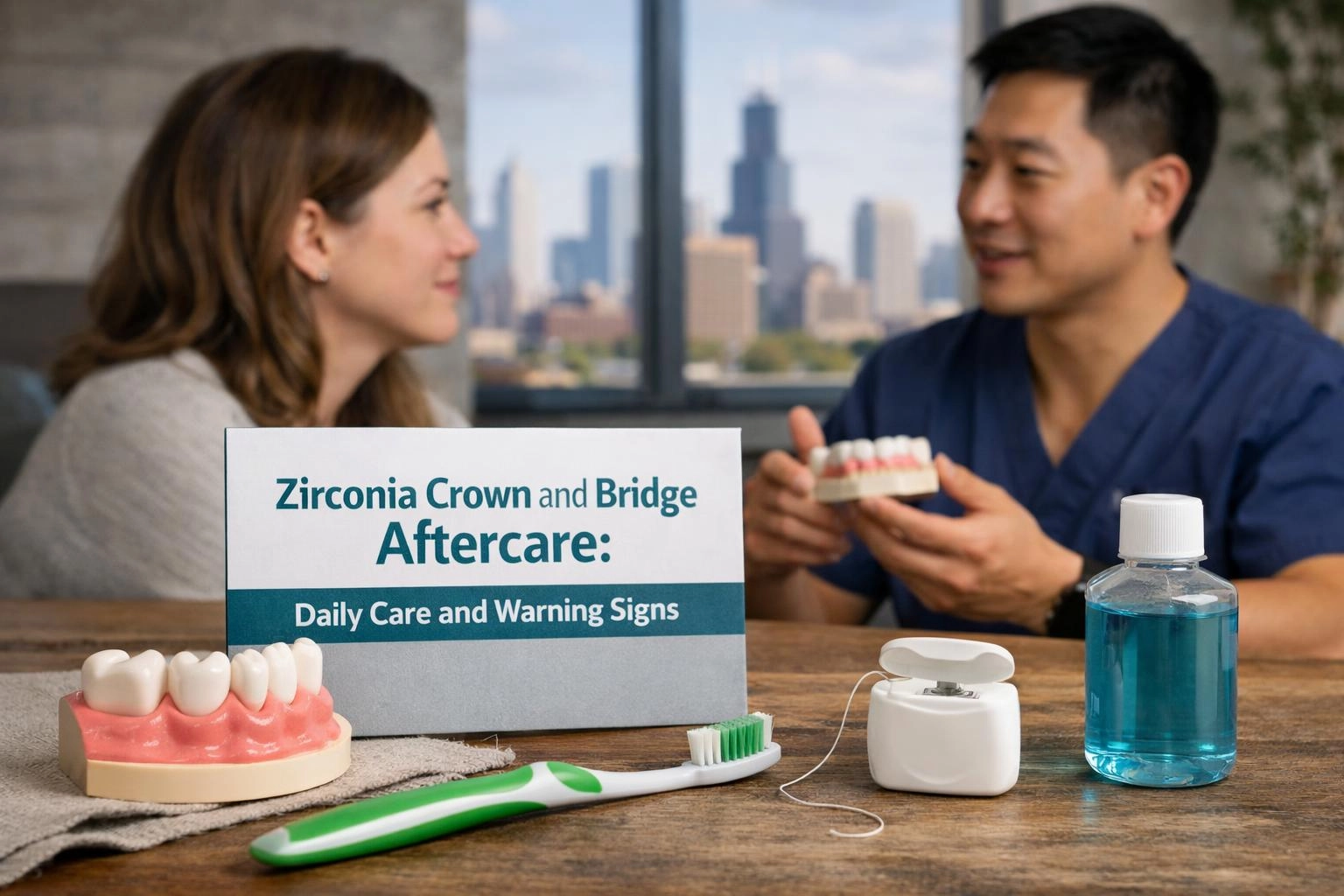
These symptoms do not always mean the restoration must be replaced, but they do mean the area needs a closer look. A quick follow-up can catch a small problem before it affects the supporting tooth or surrounding tissue. In a Chicago winter, sensitivity can feel stronger, so it helps to separate normal temperature-related tenderness from true warning signs like looseness or swelling.
How Can You Protect Your Crown or Bridge from Damage?
Zirconia crown and bridge aftercare includes preventing overload from clenching, grinding, and hard chewing. If you grind your teeth, a night guard can reduce wear. If you eat hard or sticky foods, you can chip porcelain layers or stress the supporting teeth. Prevention is easier than repair.
This kind of crown care is part of broader restorative dental care, and it protects fracture resistance over time. If you already know you clench at night, tell your dentist early so the appliance can be checked during follow-up and adjusted if needed. Small prevention steps now can save the restoration, the abutment tooth, and your schedule later.
When Should You Call a Dentist in Chicago, IL?
You should call a Chicago dentist if the crown or bridge feels loose, the bite changes, pain lasts more than a few days, or swelling develops around the gums. Early evaluation can prevent cement failure, hidden decay, or damage to the supporting tooth and surrounding tissue.
In Chicago, winter dryness and temperature swings can make a restoration feel more sensitive, but persistent pain is still a reason to check in. If you notice the area getting worse, do not wait for your next routine checkup. A timely visit can also help if travel across the city makes it tempting to postpone care. When a problem starts, the right follow-up is usually quicker and simpler than waiting for emergency dental care.
If you are unsure whether a symptom is normal, contact the office and describe the change clearly. A short call can help determine whether you need a bite adjustment, a recheck, or a same-day visit through follow-up appointment scheduling. That is especially important when a restoration feels high, loose, or sharp against the tongue.
Frequently Asked Questions
Related Resources
How Much Do All-on-4 Dental Implants Cost in Chicago?
All-on-4 dental implants cost Chicago
What It CostsDental Implant Costs in Chicago: What a Complete Treatment Quote Includes
single dental implant cost Chicago
Compared ToFull-Mouth Reconstruction vs All-on-4: Which Treatment Fits Your Needs?
full mouth reconstruction vs All-on-4 Chicago
How It WorksThe All-on-4 Dental Implant Process: Appointments, Recovery, and Final Teeth
All-on-4 dental implant process and timeline