Full-Mouth Reconstruction Timeline and Stages in Chicago, IL
Full-mouth reconstruction in Chicago, IL usually takes several months. Treatment happens in stages: consultation and diagnostics, foundation work, healing, temporary restorations, and final zirconia crowns or bridges. Simple cases move faster. Complex cases take longer because they may need extra extractions, bone or gum healing, and bite adjustment. Your exact full mouth reconstruction timeline Chicago depends on your oral health, the number of teeth involved, and whether you need implant or bridge work.
Full-mouth reconstruction in Chicago usually takes months, not days, because treatment must include planning, tooth preparation, healing, temporaries, and final restorations. Simple cases finish faster. Average cases take longer, and complex cases can run longer when extractions, gum treatment, or bite correction are needed.
| Project scope | Typical timeline | What usually drives it |
|---|---|---|
| Simple case | About 2 to 4 months | Fewer teeth treated, limited tooth preparation, and predictable zirconia crowns and bridges with minimal healing time |
| Average case | About 4 to 8 months | Several treatment phases, temporary restorations, and follow-up visits for fit and bite adjustment |
| Complex case | About 8 to 18 months or longer | Tooth extractions, gum or bone healing, implant integration, and careful occlusion correction before final restorations |
In Chicago, IL, the timeline can also shift because of scheduling, commute windows, and the season. Winter travel and follow-up visits may slow some appointments, so staged planning matters. A dense patient base also means many people need predictable temporary restorations, so work and family routines can stay on track during treatment.
Full-mouth reconstruction follows a staged sequence: consultation, scans and records, treatment planning, foundation treatment, temporary restorations, final crown or bridge placement, and follow-up adjustments. Each stage supports the next, so the bite, function, and look can be rebuilt safely and predictably.
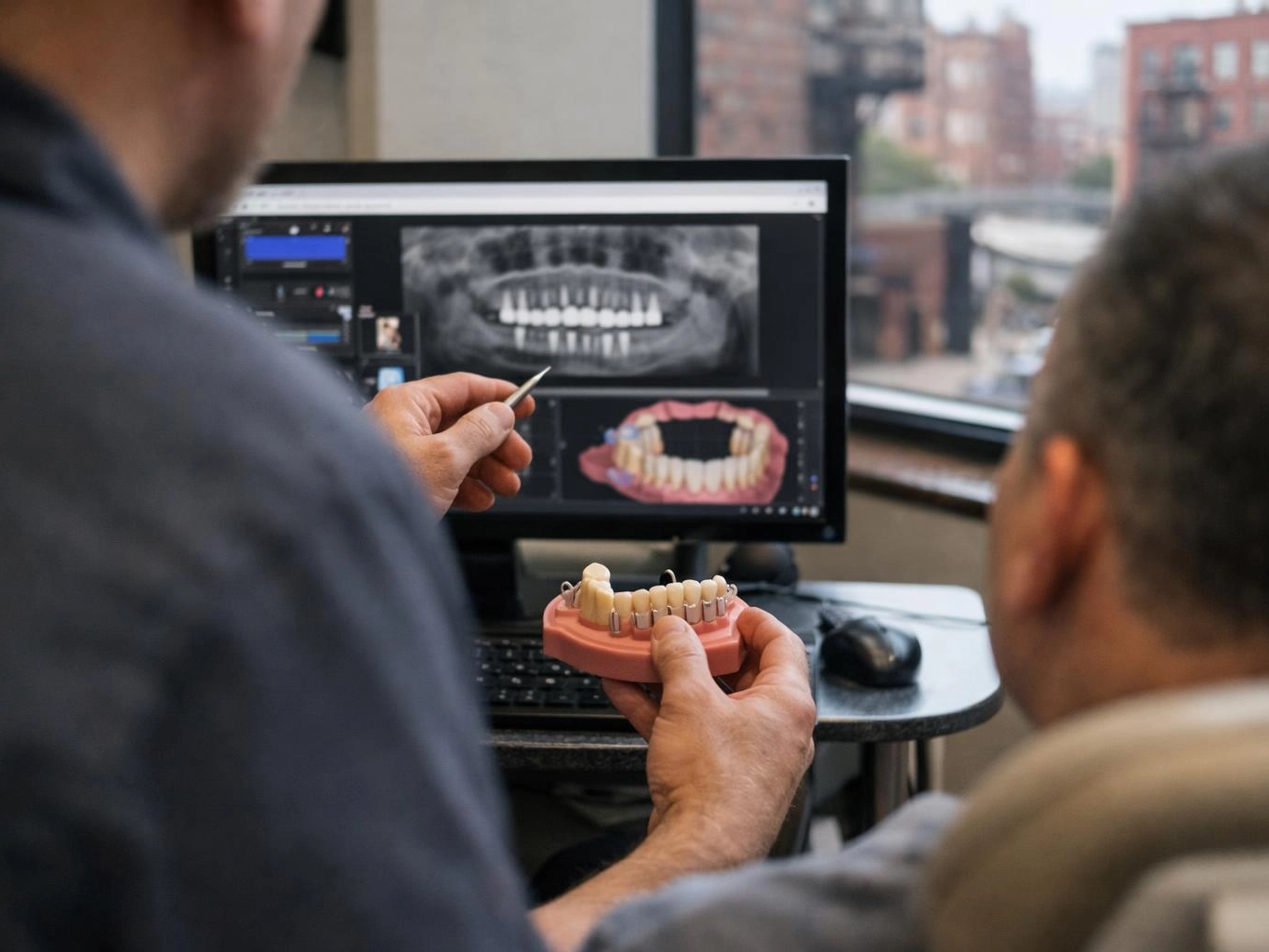
- Diagnostic consultation: The process starts with a diagnostic consultation, photos, X-rays, and records. These records help the team understand tooth decay, missing teeth, gum disease, and jaw healing needs before major work begins.
- Treatment planning: Next comes prosthodontic planning. The dentist maps treatment phases, selects materials, and decides whether the case needs crowns, bridges, implants, or extractions. This step sets the order for safe care.
- Foundation treatment: If needed, the mouth gets foundation work first. That may include tooth preparation, tooth extractions, gum treatment, or implant placement. This step can lengthen healing time, but it creates a stable base for the rebuild.
- Temporary restorations: Temporary restorations protect the teeth and gums while the mouth heals. These interim prosthetics, or provisional teeth, let patients eat, speak, and test the bite while lab work continues.
- Final restorations: The final zirconia crowns or final bridges are then delivered. Digital impressions and careful occlusion checks help the restorations fit well, look natural, and support comfortable function.
- Follow-up visits: After placement, follow-up visits fine-tune bite adjustment, comfort, and appearance. Small changes here can protect the result for the long term and reduce stress on the new restorations.
This multi-phase restorative dentistry approach also covers common case types like zirconia crown reconstruction, full-arch bridge reconstruction, and multi-stage bite rehabilitation. In each version, the same logic applies: records first, healing next, and final restorations last.
Which Factors Change the Timeline the Most?
The timeline changes most when more teeth need treatment, extractions are required, gums or bone need healing, and the bite must be rebuilt carefully. Implant-related work and complex occlusion correction usually add the most time because they need careful sequencing and healing.
- Number of teeth treated: A larger number of teeth means more tooth preparation, more appointments, and more detailed lab fabrication. A few restorations can move quickly, while a full-arch plan usually takes longer.
- Tooth extractions: Tooth extractions add recovery time before final restorations can start. The tissues need to settle, and the dentist may need to place temporary restorations or revise the plan after surgery.
- Gum health: Healthy gums support faster progress. If gum disease is present, the mouth may need periodontal care first so the new restorations have a stable foundation.
- Bone healing: Bone healing is one of the biggest schedule drivers. When grafting or implant sites need time to mature, the case must wait for the body to build strength before the next stage.
- Bite alignment: Bite alignment affects comfort, wear, and function. If the occlusion is off, the dentist may need extra visits for bite adjustment before final restorations are cemented or attached.
- Implant integration: Implant integration can add months on its own. The implant has to bond with the bone before it can support crowns or bridges, which is why implant cases often move in a slower sequence.
For Chicago patients, travel planning matters too. Offices often try to bundle appointments around work commutes, transit access, and parking needs, because predictable scheduling makes it easier to complete each phase on time.
Why Zirconia Crowns and Bridges Affect the Schedule?
Zirconia crowns and zirconia bridges affect the schedule because they need exact records, lab fabrication, and fit checks before final cementation or attachment. When many teeth are rebuilt together, the bite must be checked carefully so the restorations look natural and work comfortably for the long term.
First, the team collects digital impressions and Other records so the lab can build the case accurately. Then the restorations are made off-site, which adds waiting time but improves precision. After that, the dentist checks contacts, color, and occlusion, since a small mismatch can change comfort or wear over time.
That is why comprehensive dental reconstruction is rarely a same-day process. Zirconia is strong, but the schedule still depends on planning, lab communication, and one or more visits to confirm the final fit before the prosthodontic treatment is complete.
What Does Recovery Look Like Between Each Stage?
Recovery between stages is usually managed with temporary restorations, a soft diet, and follow-up checks for sensitivity, swelling, or bite changes. Most patients can function during treatment, but the mouth needs time to heal before final restorations are placed and adjusted.
In winter, Chicago weather can make recovery logistics harder, since snow, ice, and cold wind may complicate transit and parking. For that reason, many offices plan the heaviest treatment stages around days when patients can return safely for the next checkup.
What Should Chicago Patients Ask Before Starting?
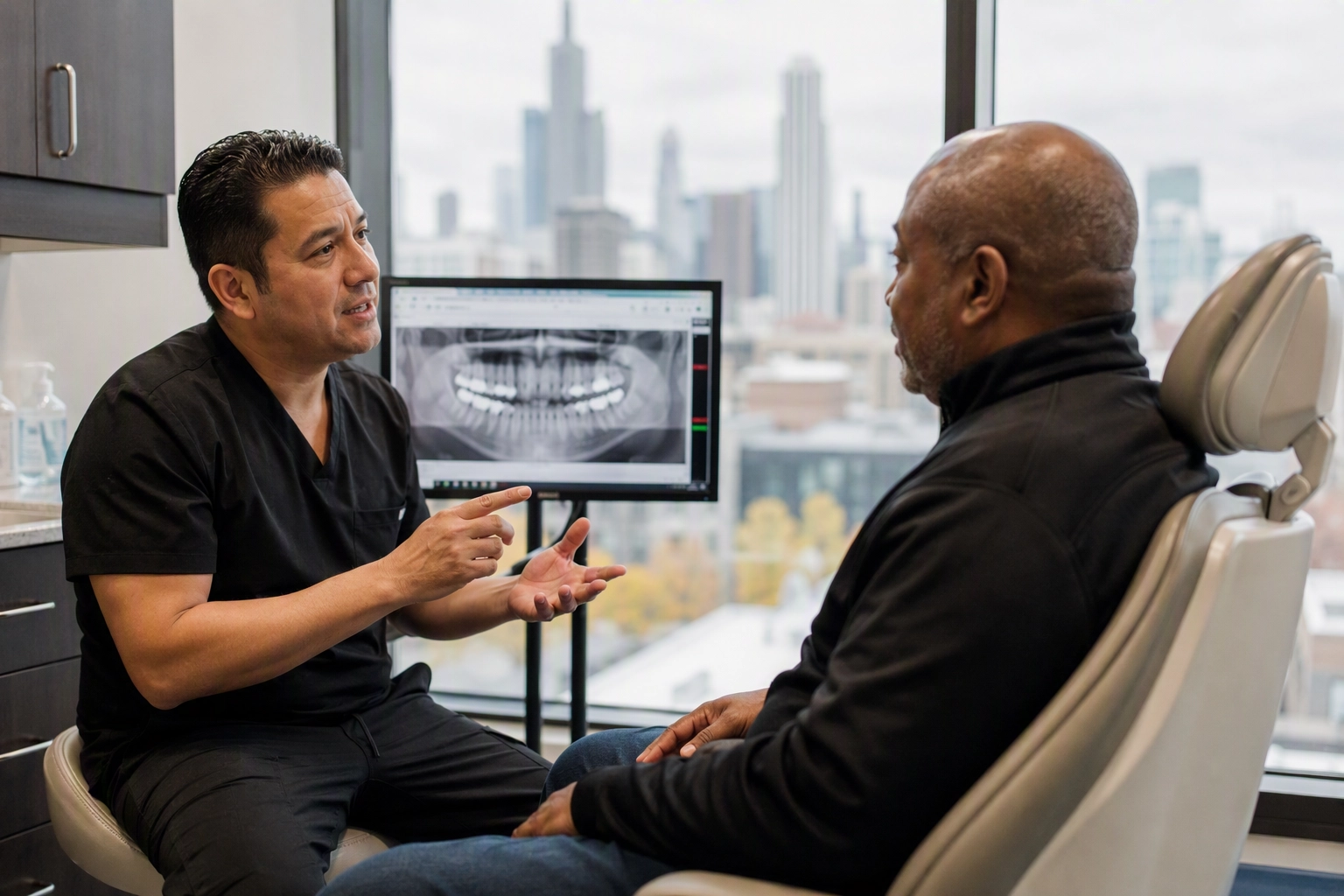
Chicago patients should ask how many visits the case will need, which stages come first, whether temporaries will protect function during healing, and how the office coordinates travel or work schedules. Clear sequencing and logistics help patients plan the treatment timeline with fewer surprises.
It’s also smart to ask about estimated visits, insurance coverage, and financing before treatment starts. Since many people compare office access, parking, and transit convenience, local logistics can affect how quickly appointments are completed and how easy it is to keep each follow-up on schedule.
Good questions to ask include whether treatment sequencing can be adjusted for work travel, whether digital impressions are used to speed planning, and how temporary restorations will help during the healing time between steps. A clear plan makes the whole process feel more manageable.
Frequently Asked Questions
Related Resources
How Much Do All-on-4 Dental Implants Cost in Chicago?
All-on-4 dental implants cost Chicago
What It CostsDental Implant Costs in Chicago: What a Complete Treatment Quote Includes
single dental implant cost Chicago
Compared ToFull-Mouth Reconstruction vs All-on-4: Which Treatment Fits Your Needs?
full mouth reconstruction vs All-on-4 Chicago
Compared ToDental Implants Abroad vs Chicago: Comparing Total Cost, Care, and Convenience
dental implants abroad vs Chicago cost