How to Choose the Right Implant Dentist in Chicago
To choose the right implant dentist in Chicago, compare training, implant experience, imaging, treatment plans, and pricing before you decide. Look for a provider who places and restores dental implants often, offers full-arch and full-mouth options when needed, explains risks and timing clearly, and shows real before-and-after cases. In Chicago, the best choice is usually a team that can handle surgery, restoration, and lab work together for steadier results and fewer surprises.
Implant dentist in Chicago choices should be judged by training, experience, diagnostics, planning, pricing, and warning signs. Chicago, IL has many specialists, so patients can compare a general dentist, an implant surgeon, and a restorative specialist with the same goals. The best choice usually comes from a full oral rehabilitation review, not a quick sales pitch.
A strong provider will explain the bone, the bite, and the final tooth before suggesting a plan. That matters in a busy city, where coordinated surgery, temporaries, and follow-up visits can save time across neighborhoods. It also helps in winter, when transit can be harder and fewer visits are easier for full-arch rehabilitation and full-mouth reconstruction.
Ask how the office handles 3D imaging, guided surgery, sedation dentistry, and maintenance. A careful implant specialist should explain bone density, occlusion, temporary teeth, and long-term care in plain language. If the team cannot connect the diagnosis to the final result, keep looking for a better fit.
The best implant dentist in Chicago combines advanced implant training, strong restorative judgment, and a clear plan for your bite, bone, and long-term care. A qualified provider should explain options, show case results, and coordinate surgery, restorations, and follow-up care without vague promises.
Look for a provider who regularly works with single tooth implant cases, multiple implant cases, All-on-4 implants, and full-arch implant bridge cases. The right choice depends on the edentulous jaw, the amount of remaining bone, and whether zirconia crowns and bridges will meet your looks and function goals. A good team will also tell you when a prosthodontist should help with the restorative side.
What Makes the Best Implant Dentist in Chicago?
The strongest implant dentist is not just someone who can place an implant fixture. They should understand restorative dentistry and oral rehabilitation from start to finish, including how the abutment, final crown, and surrounding gum tissue will work together over time. That bigger view matters because implant success depends on more than drilling and placement. It depends on the bite, the bone, the hygiene plan, and the quality of the final restoration.
In Chicago, IL, the best choice often comes from a team that coordinates surgery, temporaries, and lab work well. Busy schedules, work trips, and winter weather can make a streamlined plan much easier to finish. Providers who can cut extra visits while still using diagnostic imaging and CBCT planning are often better set up for steady care.
Board certification can help, but it is not the only thing that matters. You should also ask about implant training, case volume, guided surgery, and how the office handles bone density problems or periodontal health concerns. A dentist with real implant experience should show before-and-after photos, explain why one path is better than another, and discuss risks without making it sound easy.
It also helps to know who handles each part of the case. Some offices place the implant, others restore it, and some bring in a prosthodontist for the final prosthetic restoration. The best teams are clear about roles, timing, and maintenance so you know who will care for the implant after healing.
What Qualifications Should an Implant Dentist Have?
How Do You Compare Dental Implant Quotes in Chicago?
Dental implant quotes in Chicago should be compared by scope, not just price, because low estimates often leave out diagnostics, grafting, anesthesia, temporary teeth, and the final crown or bridge. The safest comparison is a line-by-line review of what is included, excluded, and needed for long-term success.
Ask each dental implant provider for a written treatment plan that names every step. A quote should show whether the implant fixture, abutment, bone grafting, CBCT scan, guided surgery, and final restoration are included. It should also state if sedation dentistry, temporary teeth, lab fees, or follow-up visits cost extra. That detail makes it easier to compare one dental implant provider against another without missing hidden costs.
In a city like Chicago, where patients may choose between a general dentist, an implant specialist, and a restorative dentistry team, the cheapest quote is not always the best value. If one office prices a single tooth implant very low but another includes bone density evaluation, implant maintenance planning, and zirconia crowns and bridges, the second quote may be more complete. This is especially true when a case needs bone grafting or multiple visits across different neighborhoods.
Use the table below to compare typical quote elements side by side before you decide.
| Quote item | What it should cover | Why it matters |
|---|---|---|
| Diagnostic imaging | Oral exam, X-rays, and often a CBCT scan for 3D imaging | Shows bone density, nerve location, and whether guided surgery is possible |
| Surgical phase | Implant placement, anesthesia, and any needed bone grafting | Affects the safety, timeline, and total cost of the case |
| Restorative parts | Abutment, temporary teeth, and final restoration | These shape how the implant looks and works over time |
| Materials | Porcelain, zirconia crowns and bridges, or Other prosthetic restoration options | Affects strength, appearance, and care needs |
| Aftercare | Implant maintenance, healing checks, and complication visits | Protects the investment and supports long-term success |
The best comparison is not “who is cheapest,” but “who gives the most complete and predictable plan.” If a quote leaves out temporary teeth, the final bridge, or follow-up care, the real price may rise later. A clear estimate should also explain when full-mouth reconstruction or a full-arch implant bridge is a better fit than piecemeal treatment.
What Should Be Included in a Full-Mouth Implant Treatment Plan?
What Questions Should You Ask at a Dental Implant Consultation?
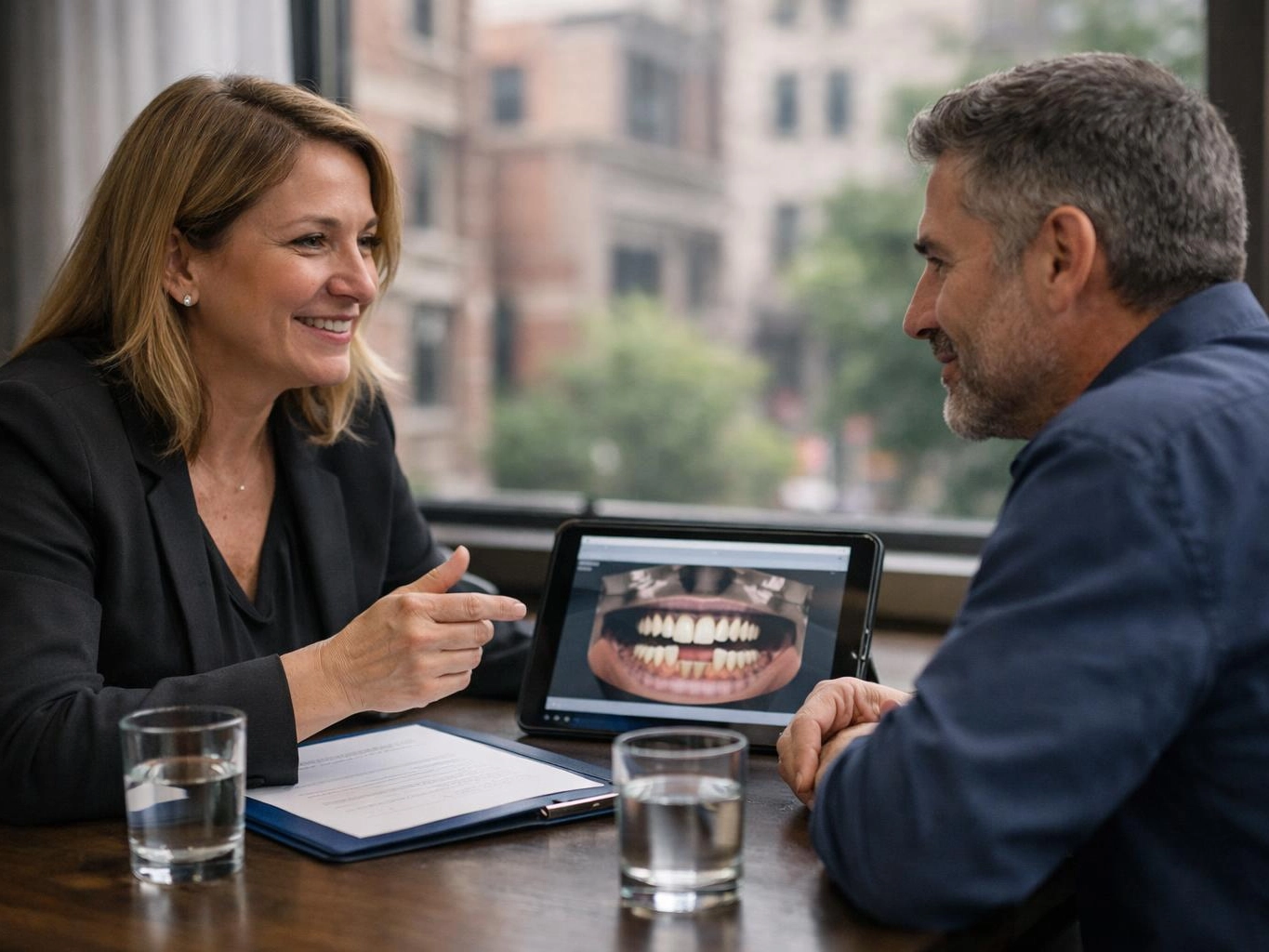
At a dental implant consultation in Chicago, ask questions that show the dentist’s training, diagnostic process, treatment sequence, risks, and support after surgery. The goal is to confirm who does each step, what the plan includes, how problems are handled, and whether the timeline fits your health and goals.

A good consultation should feel like a planning visit, not a sales event. You should leave knowing whether the provider recommends a single tooth implant, multiple implants, All-on-4 implants, or a full-arch implant bridge. You should also know whether the office uses CBCT, how they check bone density, and what role sedation dentistry may play if the procedure is long or complex.
In Chicago, local logistics matter too. If you depend on transit or need to work around winter weather, ask how many in-person visits are likely and whether the practice can coordinate the surgical and restorative steps well. A strong implant surgeon or implant specialist will answer directly and help you understand the timing of temporary teeth, healing, and the final prosthetic restoration.
Use these consultation questions to compare providers with confidence.
When the answers are clear, you can compare the plan against Other offices without guessing. That helps when one office focuses on surgery and another is stronger on the restorative side. A trustworthy team will explain the sequence in plain language and will not rush you to sign before you understand the details.
What Red Flags Should You Avoid When Choosing an Implant Dentist?
Red flags in an implant dentist include rushed exams, missing 3D diagnostics, vague credentials, pressure to sign quickly, unclear pricing, and promises of perfect results. In Chicago, you should also watch for providers who cannot explain how they handle bone loss, sedation, temporaries, or follow-up care.
The biggest warning sign is a treatment plan that seems fixed before the oral exam is finished. If the office does not recommend CBCT or another diagnostic image when the case seems complex, that is a problem. A provider should also explain whether bone grafting, periodontal treatment, or a different restorative dentistry approach is needed before implant placement.
Be careful if the practice talks more about discounts than diagnosis. High-pressure sales, hidden fees, and unrealistic promises often mean the office is selling a product instead of planning oral rehabilitation. A credible dental implant provider should be comfortable discussing risks, healing time, and the chance that a case needs more than one visit.
The list below covers common red flags to avoid before you commit.
If a provider cannot explain how they manage bone density issues, sedation dentistry, temporary teeth, or coordination with a prosthodontist, keep looking. The safer choice is a team that is clear about the steps and realistic about the work involved.
Which Implant Options Should a Chicago Provider Be Able to Explain?
A strong Chicago implant provider should explain single implants, multiple implants, All-on-4, full-arch restoration, and zirconia crowns and bridges in plain language. They should match the option to your bone, bite, appearance, and budget instead of steering every case toward the same fix.
The right dental implant provider should show how each option works in a real mouth. A single tooth implant may be best when only one area is missing. Multiple dental implants may support a bridge when several teeth are gone. For an edentulous jaw, full-arch rehabilitation with All-on-4 dental implants can sometimes reduce surgical sites and shorten the full process. Still, the best plan depends on your bone, your bite, and your goals.
A helpful consultation should also cover the materials used for the final prosthetic restoration. Zirconia crowns and bridges are often discussed for strength and appearance, but the right answer is not the same for every case. A good provider will explain whether a full-mouth reconstruction, a full-arch implant bridge, or a staged plan is the better path for long-term function and care.
If the office can explain the tradeoffs in simple terms, you are likely in the right place. If every answer circles back to one product, the team may be selling a fixed solution instead of tailored care. The best implant specialist will match treatment to your oral rehabilitation needs, not the Other way around.
Frequently Asked Questions
Related Resources
How Much Do All-on-4 Dental Implants Cost in Chicago?
All-on-4 dental implants cost Chicago
What It CostsDental Implant Costs in Chicago: What a Complete Treatment Quote Includes
single dental implant cost Chicago
Compared ToFull-Mouth Reconstruction vs All-on-4: Which Treatment Fits Your Needs?
full mouth reconstruction vs All-on-4 Chicago
Compared ToDental Implants Abroad vs Chicago: Comparing Total Cost, Care, and Convenience
dental implants abroad vs Chicago cost