
Smile Makeover Consultation Checklist for Chicago Patients
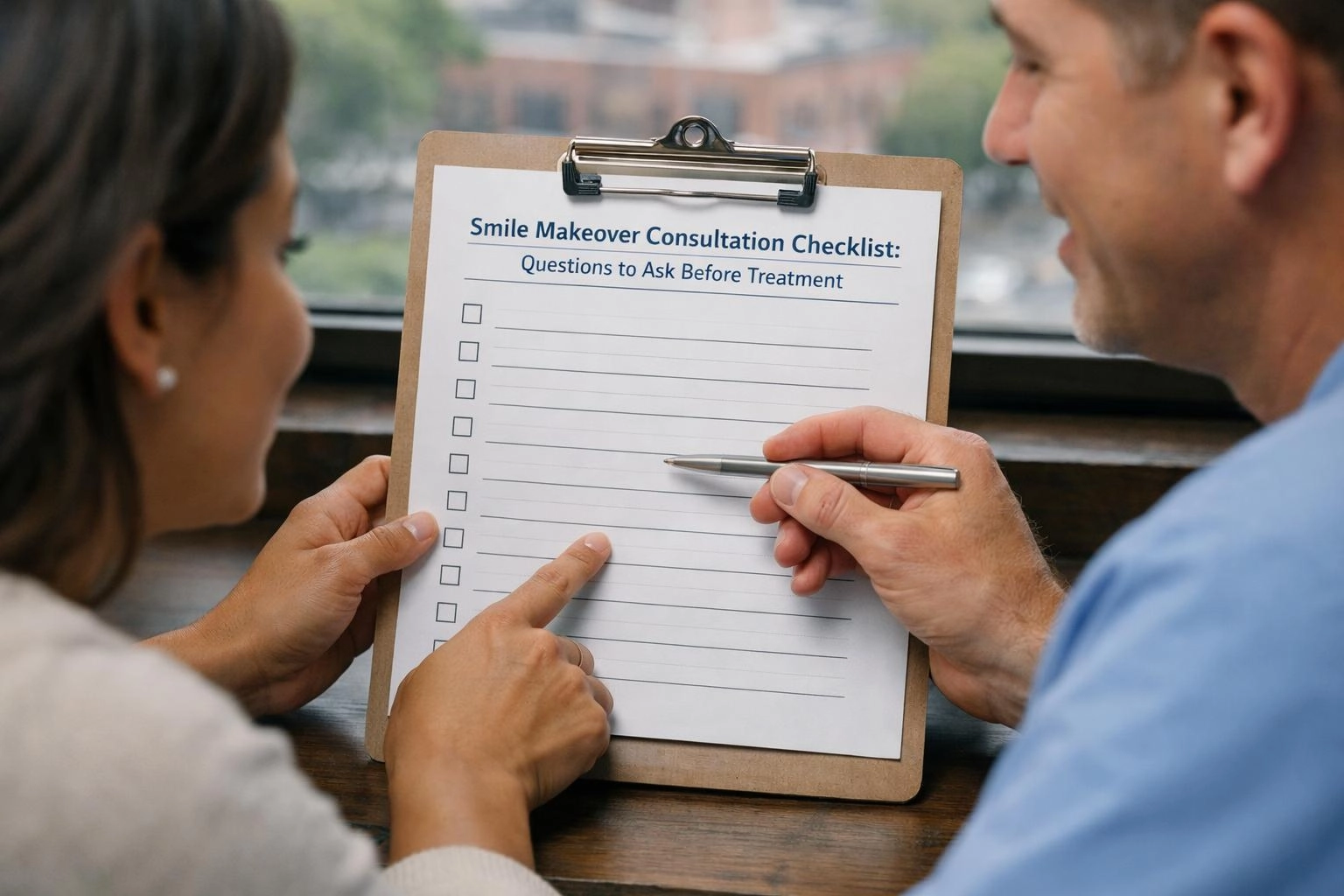
Before a smile makeover, ask what problems the treatment can fix. Ask if you need veneers or crowns. Ask how natural the result will look. Ask if you can see a mock-up first. Ask how long treatment will take, and how long the results should last. In Chicago, IL, a strong consultation should also cover local follow-up plans, material choices, and whether your bite and support teeth can handle the treatment safely.
What Questions Should You Ask Before a Smile Makeover in Chicago?
A smile makeover consultation should start with your goals, a diagnosis, and your treatment choices. Ask what problems the plan can fix, which teeth are involved, what Other paths exist, how long treatment takes, and what upkeep you'll need. The best answers connect your smile goals to bite health, tooth structure, and long-term results.
Start by asking how the dentist will build your treatment plan after an oral exam, bite check, and review of photos or scans. A good Chicago dentist should explain if the goal is cosmetic dentistry alone or a mix of restorative dental care and esthetic dentistry. That matters if you have worn edges, old fillings, or gum health concerns that change the final design. In many cases, the plan also depends on occlusion, enamel reduction, and whether enough healthy tooth structure is left for a lasting result.
Ask what the dentist sees as your main oral health goals: whiter color, better shape, closed spaces, stronger chewing, or less wear. In a city like Chicago, where many patients commute and plan around work, ask if the treatment can be staged in a clear way across visits. This is also the time to ask about digital smile design, temporary restorations, and whether a prosthodontic evaluation is needed for complex cases such as full-mouth reconstruction. If you clench or grind, say so early, because bite alignment and maintenance affect the outcome.
What Dental Problems Can a Smile Makeover Fix?
A smile makeover can fix cosmetic and functional dental problems like stains, chips, cracks, worn edges, uneven spacing, misshapen teeth, and some bite wear patterns. It can also improve proportion and symmetry. In more complex cases, it may combine veneers, crowns, bridges, and reconstruction to restore both appearance and function.
Common concerns include tooth discoloration from aging, coffee, tea, or past dental work, plus chipped teeth from trauma or daily wear. It can also address gaps, uneven wear, and short teeth that make the smile look flat. If the issue is structural, the plan may involve restorative dental care instead of cosmetics alone. That is why the oral exam matters. It helps separate what can be improved with shade and shape from what needs support, coverage, or replacement.
For patients with stronger wear patterns, the dentist may also look at bite alignment and jaw habits before recommending treatment. A smile makeover can improve the look of the front teeth, but it should not ignore pressure from clenching or grinding. When the back teeth, gums, or bite forces are part of the problem, the solution may include porcelain veneers, zirconia crowns, bridges, or full-mouth reconstruction. The right plan should match the problem instead of hiding it.
Will I Need Veneers or Crowns for a Smile Makeover?
Porcelain veneers are usually best when teeth are mostly healthy but need shape, color, or small alignment changes, while crowns are better when teeth are heavily restored, cracked, weakened, or need more coverage. Your dentist should explain why each tooth is a veneer, crown, bridge, or Other option based on structure and bite forces.
| Option | Best for | Tooth preparation | What to ask |
|---|---|---|---|
| Porcelain veneers | Healthy teeth with staining, small gaps, chips, or minor shape concerns | Usually lighter enamel reduction | How much enamel reduction is needed, and is it conservative? |
| Zirconia crowns | Teeth with big fillings, cracks, or weakness | More coverage and more reshaping | Does the tooth need full coverage because it cannot safely support a veneer? |
| Bridges | Missing teeth that need replacement | Support teeth are prepared | Will the bridge protect the bite and fit the long-term plan? |
| Full-mouth reconstruction | Worn, damaged, or complex cases needing broad repair | Often multiple teeth and phased work | Why is a larger reconstruction needed instead of a smaller cosmetic fix? |
If your case includes damaged or heavily restored teeth, the dentist may recommend zirconia crowns for strength, especially where bite forces are high. That can matter for patients who clench under urban stress or grind at night. Ask whether a bridge is needed for missing teeth, or whether a mix of veneers and crowns gives the safest result. Also ask whether temporary crowns or Other provisional steps will protect you while the final work is being made.
How Can You Know if Your New Smile Will Look Natural?
A natural-looking smile comes from the right tooth shape, size, shade, and symmetry matched to your face, lips, and bite. Ask for digital previews, shade selection, and examples of similar cases. The result should look like healthy teeth, not oversized or overly white restorations, and it should fit your speech and expression.
Ask whether the office uses digital smile design to plan the look before treatment begins. That tool can help show how your smile may fit facial harmony, lip line, and tooth proportions. You should also ask how the dentist handles shade matching, because the right shade guide choice matters as much as shape. Natural esthetic dentistry should not chase the brightest color. It should aim for balance with the rest of your features.
Good planning also considers the way the teeth move when you talk and smile. If the restorations are too long, too square, or too white, they can look artificial. Ask to see case photos that show similar tooth proportions and to hear how the dentist will check the final look after placement. In a busy city like Chicago, that preview step matters because staged care gives you time to review the design before you commit.
Will I See a Mock-Up Before My Teeth Are Prepared?
A mock-up lets you preview the proposed smile before permanent tooth preparation begins. It may be shown as a wax-up, digital simulation, or temporary trial smile. This step helps you confirm shape, length, and color early, so changes can be made before enamel is altered and final restorations are made.
If the office cannot provide a preview, ask why. A strong cosmetic smile treatment should give you a chance to react to the shape and shade before the final restorations are built. That is especially helpful when you want esthetic dentistry that still looks like you, not a generic template.
How Long Does a Smile Makeover Take and How Long Will It Last?
A smile makeover can take a single visit or several appointments depending on whether you need veneers, crowns, bridges, whitening, or full-mouth reconstruction. Longevity depends on materials, bite forces, oral hygiene, and habits like grinding. With good planning and care, restorations can last for many years, but they'll still need periodic maintenance.
For Chicago patients, ask how winter cold and dry indoor heat may affect sensitivity during treatment and aftercare. It may change appointment timing, especially if temporary restorations are in place. Also ask about commute-friendly scheduling, since many patients need staged visits that stay predictable. If you grind or clench, say so clearly, because that affects material choice, longevity, and the need for a night guard or Other protection.
What Red Flags Should Make You Pause Before Treatment?
If the consultation feels rushed or vague, pause before you agree to any smile enhancement. A trustworthy plan should explain the diagnosis, preview options, and why each tooth needs a specific approach. If that is missing, the safest step is to slow down and ask for more detail or a second opinion.
- Pressure selling before a full oral examination or bite analysis.
- No diagnostic records such as photos, scans, or a clear treatment plan.
- No preview before enamel reduction or Other irreversible work.
- Unclear aftercare about maintenance, repairs, or follow-up visits.
Be especially careful if the dentist cannot explain whether a veneer, crown, or bridge is the right option for each tooth. That matters when the case touches bite alignment, gum health, or full-mouth reconstruction. A second opinion can protect you from treatment that looks good on paper but does not hold up in real life.
Frequently Asked Questions
Related Resources
How Much Do All-on-4 Dental Implants Cost in Chicago?
All-on-4 dental implants cost Chicago
What It CostsDental Implant Costs in Chicago: What a Complete Treatment Quote Includes
single dental implant cost Chicago
Compared ToFull-Mouth Reconstruction vs All-on-4: Which Treatment Fits Your Needs?
full mouth reconstruction vs All-on-4 Chicago
Compared ToDental Implants Abroad vs Chicago: Comparing Total Cost, Care, and Convenience
dental implants abroad vs Chicago cost