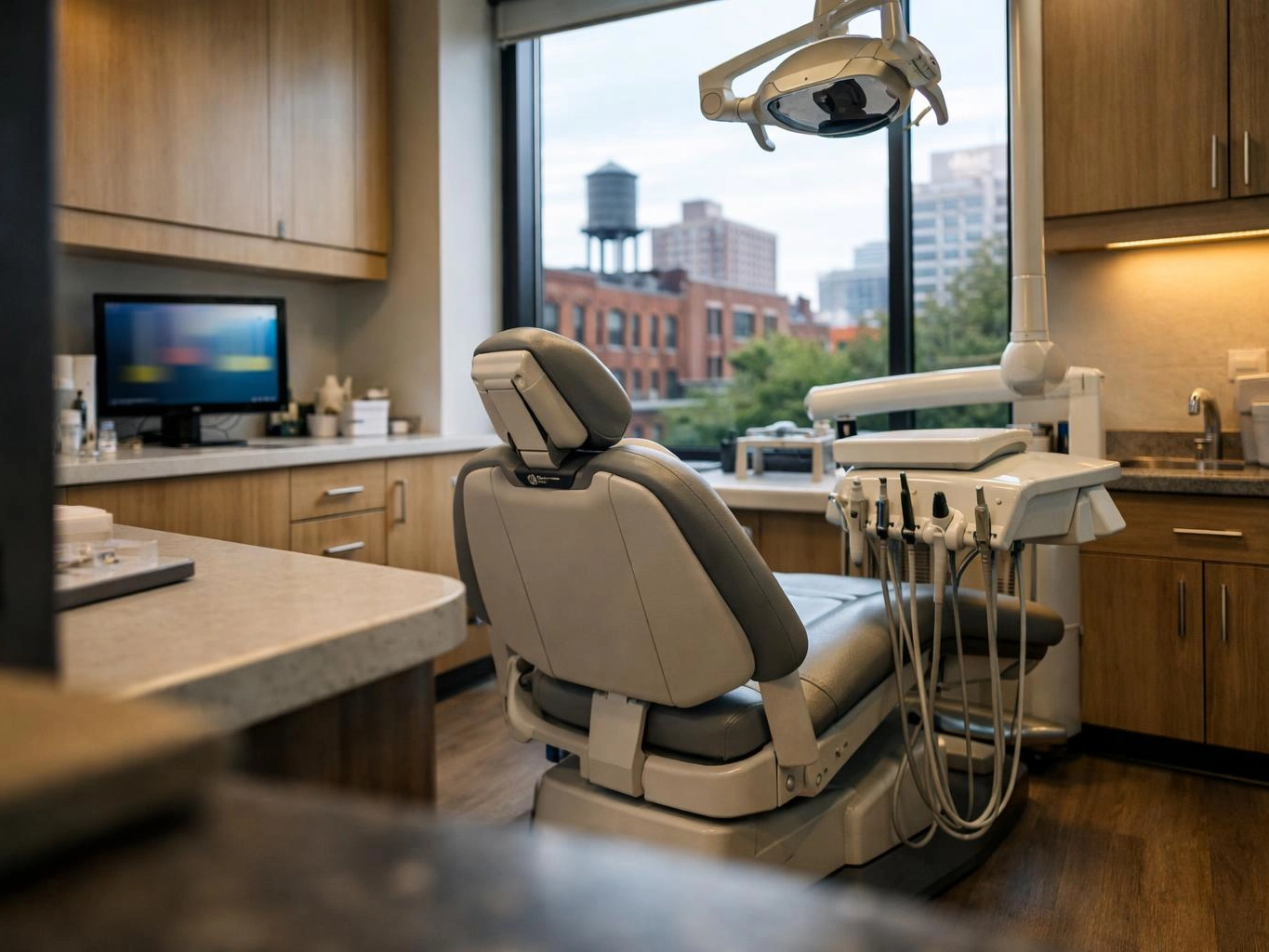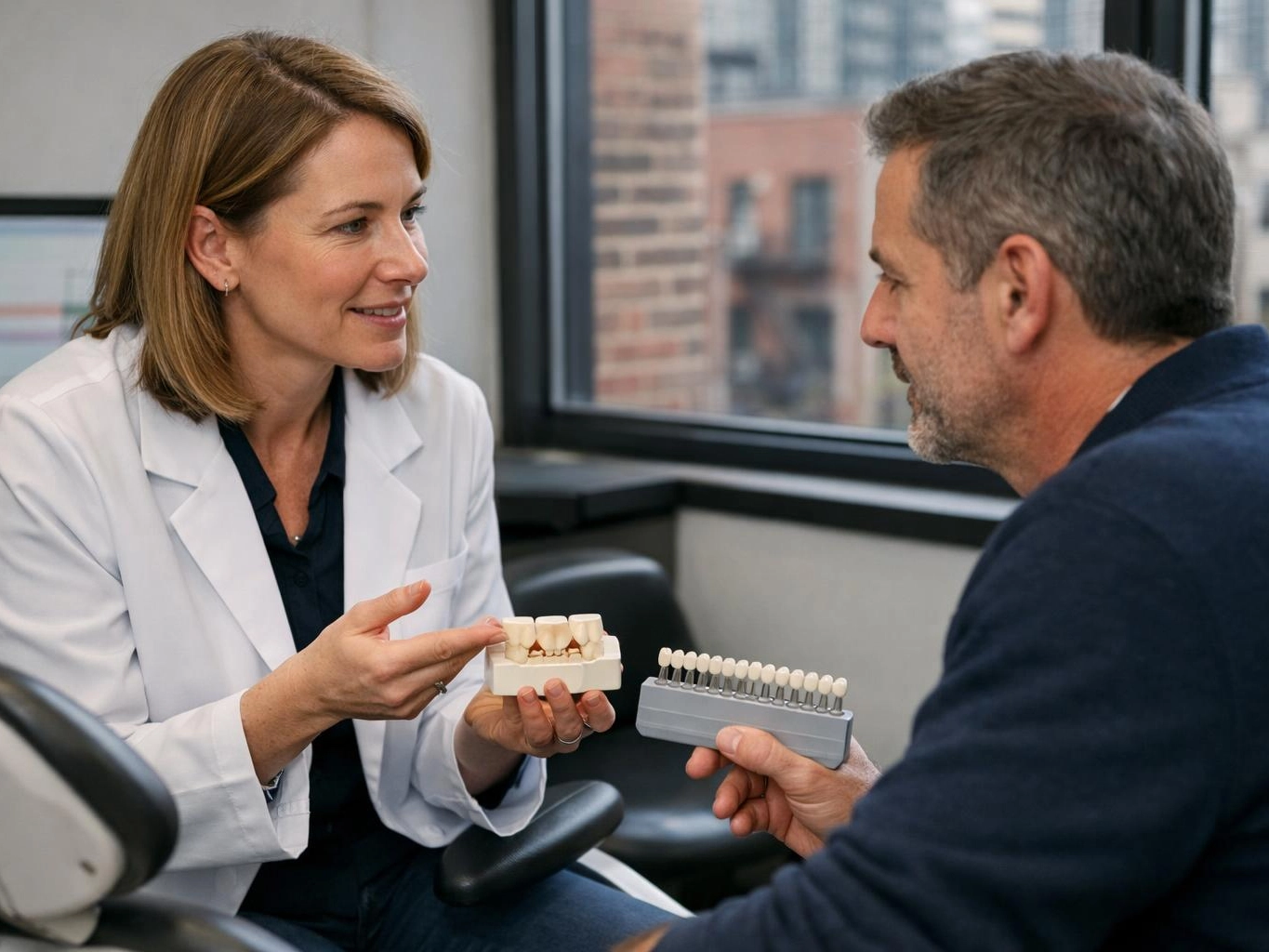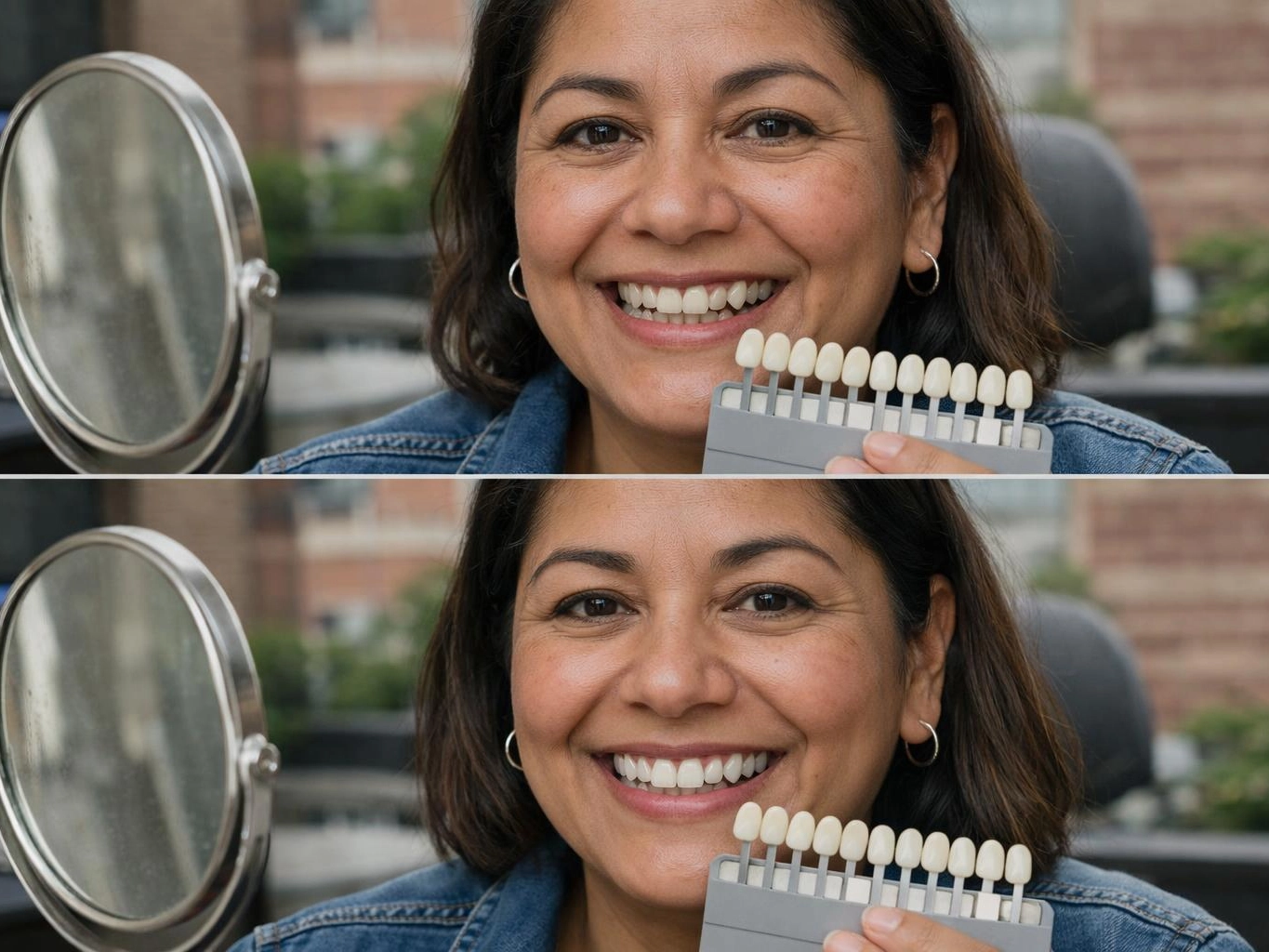
All-on-4 Full Arch Dental Implants in Chicago
All-on-4 full arch dental implants replace a full row of missing teeth with four placed implants that support a fixed bridge. In Chicago, patients compare All-on-4 with full-arch implant approaches, individual implants, and Other options to balance cost, healing time, stability, and long-term care. All-on-4 is often faster and more affordable than placing many individual implants, but full-arch plans may offer more custom support in complex cases. The best option depends on bone volume, bite force, oral health, and treatment goals.
All-on-4 full arch dental implants are compared with individual implants and Other full-arch tooth replacement options in Chicago, IL. Each plan changes the surgery, the healing stage, and how you clean the final smile. The right choice depends on your jawbone, bite force, and whether you want a simpler full arch restoration or a more custom implant-supported prosthesis.
For many patients, practical life factors matter too. Downtown Chicago traffic can make fewer visits appealing, and winter dry air plus indoor heating can make hydration and cleaning even more important after oral surgery and during recovery.
Access to sedation dentistry and oral surgery coordination also matters. When those services work together, same-day immediate load plans are easier to set up, especially for patients balancing work, commuting, and smile restoration goals.
All-on-4 vs Full-Arch Dental Implants: What’s the Difference?
All-on-4 dental implants are a specific full-arch treatment that uses four implants to support a fixed prosthesis. Full-arch dental implants is the broader category for replacing an entire arch with implant support. In Chicago, the main difference is scope and customization: All-on-4 is a streamlined plan, and full-arch treatment may use more implants or different angles for complex cases.
In practical terms, the All-on-4 protocol uses placed implant posts and abutments to anchor a fixed bridge across an edentulous arch. A full-arch implant bridge can look similar once finished, but the planning may differ based on bone density, sinus position, bite force, and whether bone grafting is needed before or during prosthodontics care.
That is why two patients may both hear “full-mouth dental implants” yet receive different care plans. One person may be a strong candidate for immediate load with four implant-supported bridge points, while another may need a broader full-arch rehabilitation approach for stronger support and better long-term force balance.
Which Is Better: Individual Implants or All-on-4?
Individual implants are better when you only need to replace one or a few missing teeth, because they protect nearby teeth and can feel very natural. All-on-4 is better when many teeth in one arch are failing, because it replaces the whole arch with fewer surgeries, faster delivery, and simpler care than restoring each tooth separately.
Put simply, single-tooth implants are the better match for partial replacement. All-on-4 is the stronger match for a full arch restoration when most or all teeth are compromised.
What Costs, Timeline, and Maintenance Look Like Side by Side?
All-on-4 usually has a shorter timeline and simpler care than a full-mouth solution built from many individual implants, while full-arch dental implant treatment can involve more custom work and more visits. In Chicago, the choice often comes down to upfront complexity, healing time, and long-term cleaning access around a fixed bridge.
Chicago pricing factors often include sedation, imaging, bone grafting, lab work, and whether the final prosthesis is designed as a fixed bridge or a more adjustable full-mouth dental implants plan. The more custom the restoration, the more likely the treatment timeline will stretch across several stages of healing and adjustment.
| Factor | All-on-4 | Broader Full-Arch Implant Plan |
|---|---|---|
| Cost | Usually more streamlined, with fewer implant posts and less chair time overall | Often higher when extra implants, grafting, or complex prosthodontics are needed |
| Treatment timeline | Often faster, especially when immediate load is possible | May take longer because planning and healing can be more involved |
| Maintenance needs | Cleaning around a fixed bridge is simpler than replacing many separate teeth | May require more careful access, cleaning tools, and follow-up checks |
| Best for | Patients wanting efficient full arch restoration and fewer visits | Patients who need more support, more customization, or different force balance |
Quick Comparison: Cost, Healing, and Best Fit
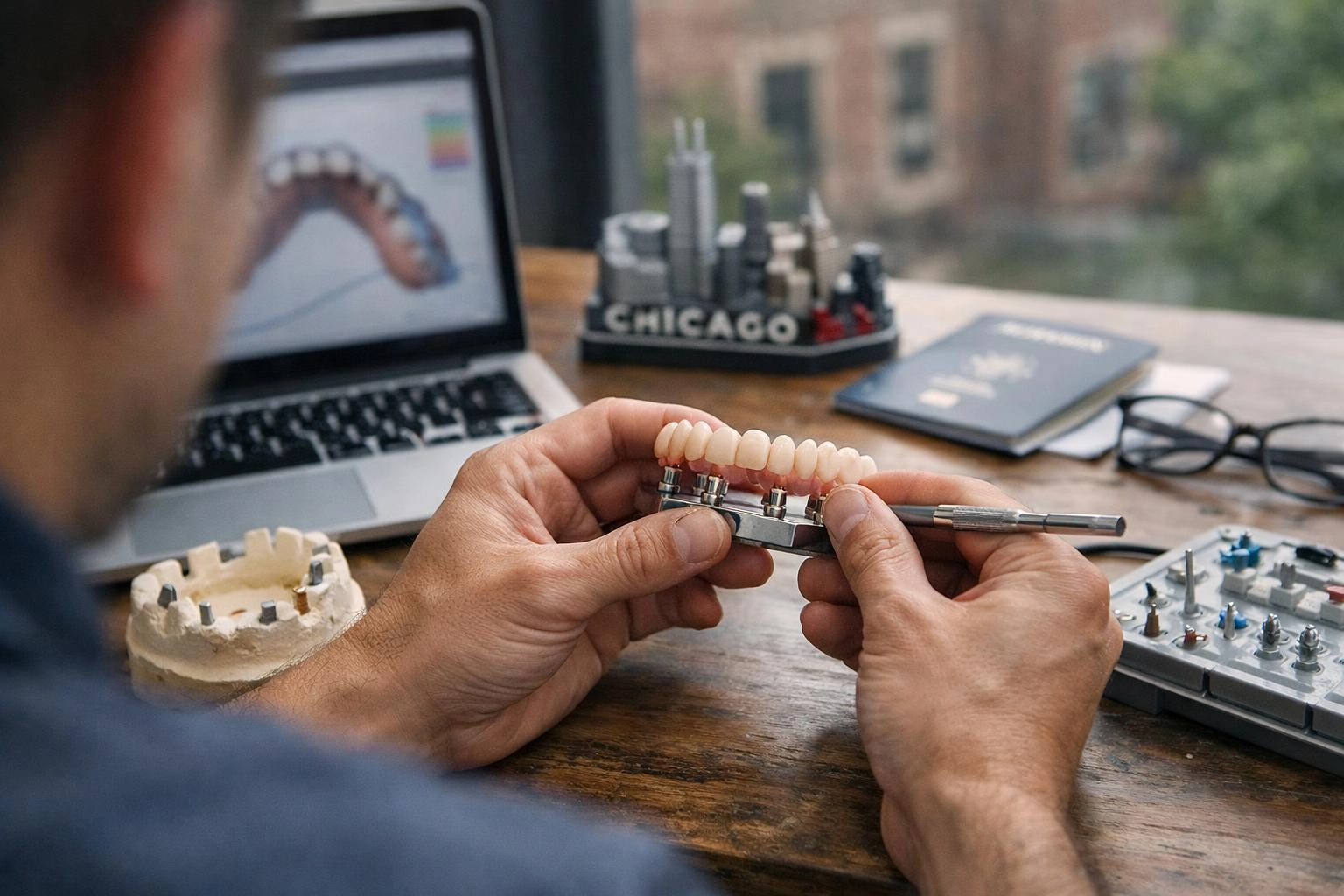
The quickest way to compare these options is by cost, healing, maintenance, and fit. All-on-4 is usually designed for efficiency and full-arch stability, while multi-implant full-arch plans can be better for patients who need extra support or more custom force balance. Individual implants are best when fewer teeth are missing.
| Option | Typical Cost Comparison | Healing Period | Best Candidate |
|---|---|---|---|
| All-on-4 full-arch restoration | Usually mid-range for full-mouth dental implants because the design is efficient | Often shorter if immediate load is appropriate | Someone needing a stable full arch with fewer surgeries |
| Broader full-arch rehabilitation | Can be higher due to customization, grafting, or added implants | Often longer because treatment may be staged | Someone with complex bone density or bite conditions |
| Single-tooth implant | Best when only one tooth needs replacement | Usually localized, but still needs osseointegration time | Someone with one or a few missing teeth |
What Are the Pros and Cons of All-on-4 and Full-Arch Implants?
All-on-4 offers a fixed full-arch smile with fewer implants, faster treatment, and easier restoration planning, but it can be less flexible if bone or bite conditions are complex. Full-arch implant treatment can be more customizable and sometimes more stable in harder cases, but it may require more planning, higher cost, and longer treatment time.
The downside of all on four dental implants is usually not that they fail often, but that the design may be less forgiving if the patient needs more support than four implants can comfortably provide. In those cases, a broader tooth replacement strategy may be the safer long-term fit.
How Painful Are Full-Arch Implants During Recovery?
Full-arch implants are usually described as manageable rather than severely painful, because most discomfort happens during the first several days and is controlled with medication, rest, and soft foods. Chicago patients often compare sedation options, swelling control, and recovery planning to make the procedure feel easier and less disruptive to work and travel.
During the healing stage, post-op discomfort often feels most noticeable when swelling peaks, when the mouth is tender, or when a healing abutment and new prosthesis are still settling. Sedation dentistry can help patients feel calmer during oral surgery, and good planning can make the first week smoother.
For many people, the biggest challenge is not severe pain but the temporary limits on eating, speaking, and cleaning. Staying hydrated matters more in winter because Chicago’s dry air and indoor heating can make the mouth feel drier, so follow-up instructions, oral rinsing, and cleaning become especially important.
Which Dental Implant Option Has the Highest Success Rate?
Dental implants have high success rates overall, and the highest success usually comes from the option that best matches bone quality, bite forces, hygiene habits, and long-term care. In many cases, properly planned implant-supported restorations succeed best when the patient follows good home care and regular professional follow-up.
Osseointegration is the key step behind long-term implant survival rate, because the implant must bond with the jawbone before it can carry normal chewing loads. That is why treatment planning, oral health, and cleaning matter more than choosing the biggest or most expensive option.
For Chicago patients, the strongest plan is often the one that fits daily life. A stable fixed bridge can do very well when supported by healthy bone density and steady care, while a single-tooth implant may be the better answer if only one area needs replacement.
Frequently Asked Questions
Ready to compare your options with a Chicago implant team? Use to schedule a consultation and review whether All-on-4, single-tooth implant care, or a broader full-arch plan is the better match for your smile, schedule, and long-term goals.