Many cases use an All-on-4 or full-arch plan. In Chicago, IL, same-day results depend on bone support, oral health, and careful planning. Final teeth come later, after healing. Some patients need grafting or extractions first. Total cost also changes with insurance, materials, and whether both arches are treated.
The temporary prosthesis stays in place with immediate loading when the implants are stable enough. The final bridge comes after healing and osseointegration are complete.
In plain terms, this is a full-arch fix for people who want fixed teeth instead of a removable denture. In Chicago, IL, the plan also has to fit local follow-up access, winter travel, and bite checks while the implants settle.
That’s why full mouth dental implants are about timing, not just speed. The team checks the bite, chooses the temporary bridge, and decides if immediate loading is safe. If not, a staged plan can protect the long-term result.
Full mouth dental implants replace failing teeth with implants and a fixed temporary arch on the same visit. You leave with usable teeth instead of a removable denture. The implants then heal and bond with bone over time.
The process starts with diagnosis. Then it moves to oral surgery, implant placement, and same-day teeth attachment if the bone can hold the implants well. This immediate loading approach depends on implant stability, bite quality, and how well the temporary prosthesis protects the surgical sites.
Over the next few months, osseointegration lets the implant posts bond with bone. That healing is what makes the final bridge strong. During that time, your care team checks tissue response, comfort, and bite alignment so the final teeth fit well.
All-on-4 Dental Implants Step-by-Step
All-on-4 treatment follows a clear path: evaluation, imaging, surgical planning, tooth removal if needed, implant placement, immediate temporary teeth, then healing and final restoration. The plan uses four carefully placed implants per arch. It often avoids major grafting when bone support is good.
Because the steps are planned ahead, the team can cut down on surprises during surgery. In Chicago, IL, that planning also helps patients who travel in for care and need tight scheduling for surgery, follow-up, and prosthetic adjustments.
What Happens Before Surgery and Why Planning Matters?
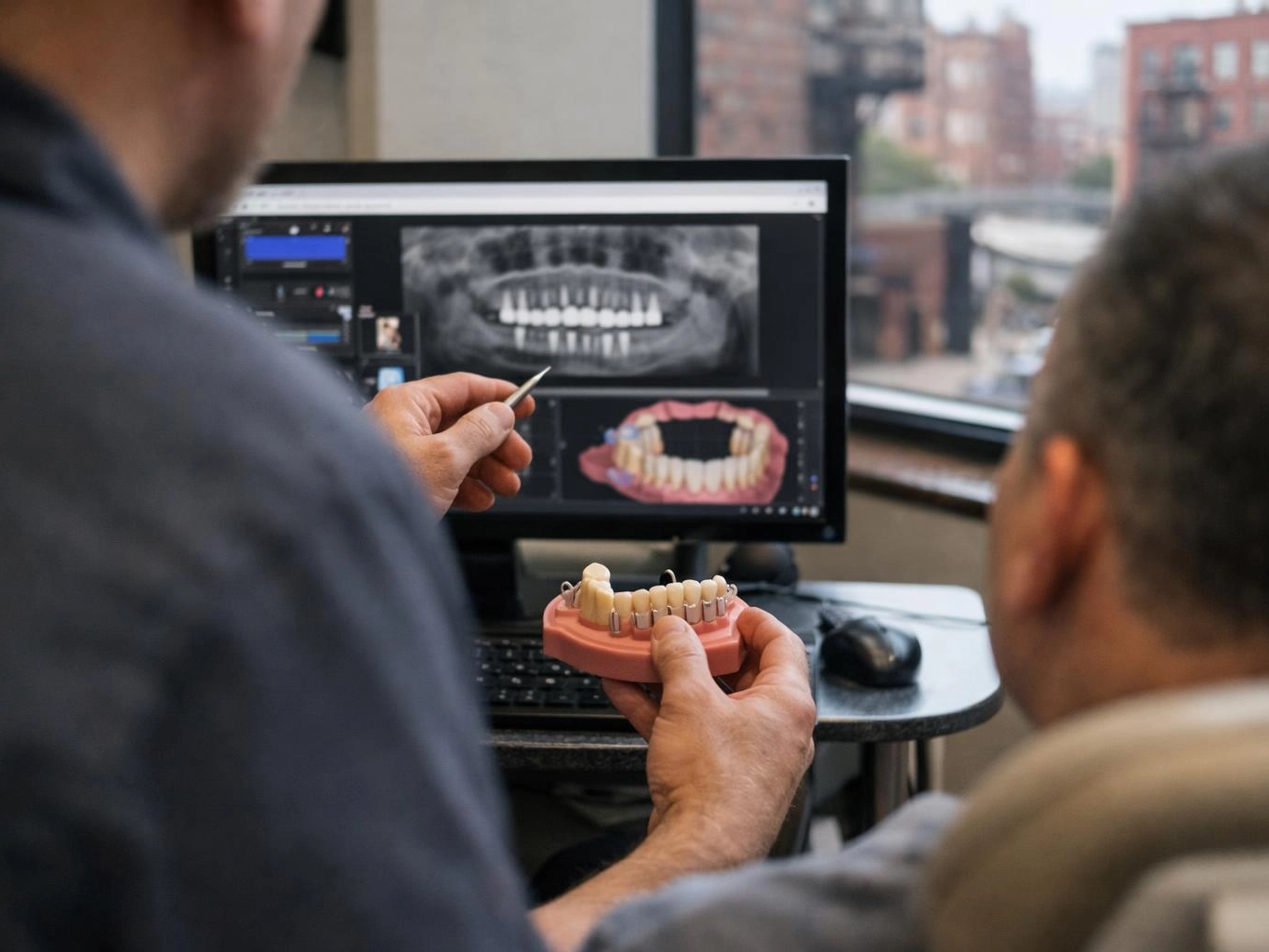
Before surgery, the team uses scans and bite analysis to map bone volume, nerve position, and prosthetic space. Careful planning shows whether same-day teeth are possible, whether extractions are needed, and how the temporary arch should fit.
A CBCT scan and digital planning help the surgeon confirm implant stability before treatment day. The team also checks the bite so the temporary prosthesis doesn’t take too much force. That step matters, because the wrong bite can slow healing or overload the implants.
Good planning helps patients coming from outside the city, too. Follow-up visits, bite checks, and repair appointments should fit around Chicago winter weather and travel time.
Best Type of Full Mouth Dental Implants for Your Case
The best type of full mouth dental implants depends on bone support, bite force, esthetics, and budget. All-on-4 is often chosen for fewer implants and efficient same-day treatment, while All-on-6 may add support in some cases. Fixed full-arch bridges are usually picked when patients want a stable, non-removable result.
For many people, the choice comes down to how much support the jaw can provide and how much upkeep they want later. The prosthetic lab can also shape the final look, especially when smile line, speech, and bite need fine-tuning.
Are All-on-4 Dental Implants Removable?
All-on-4 dental implants are not removable by the patient. They’re usually fixed to the implants like a bridge, so they feel more secure than a denture. A dentist can remove the prosthesis for maintenance or repair, but daily cleaning is done with special tools at home.
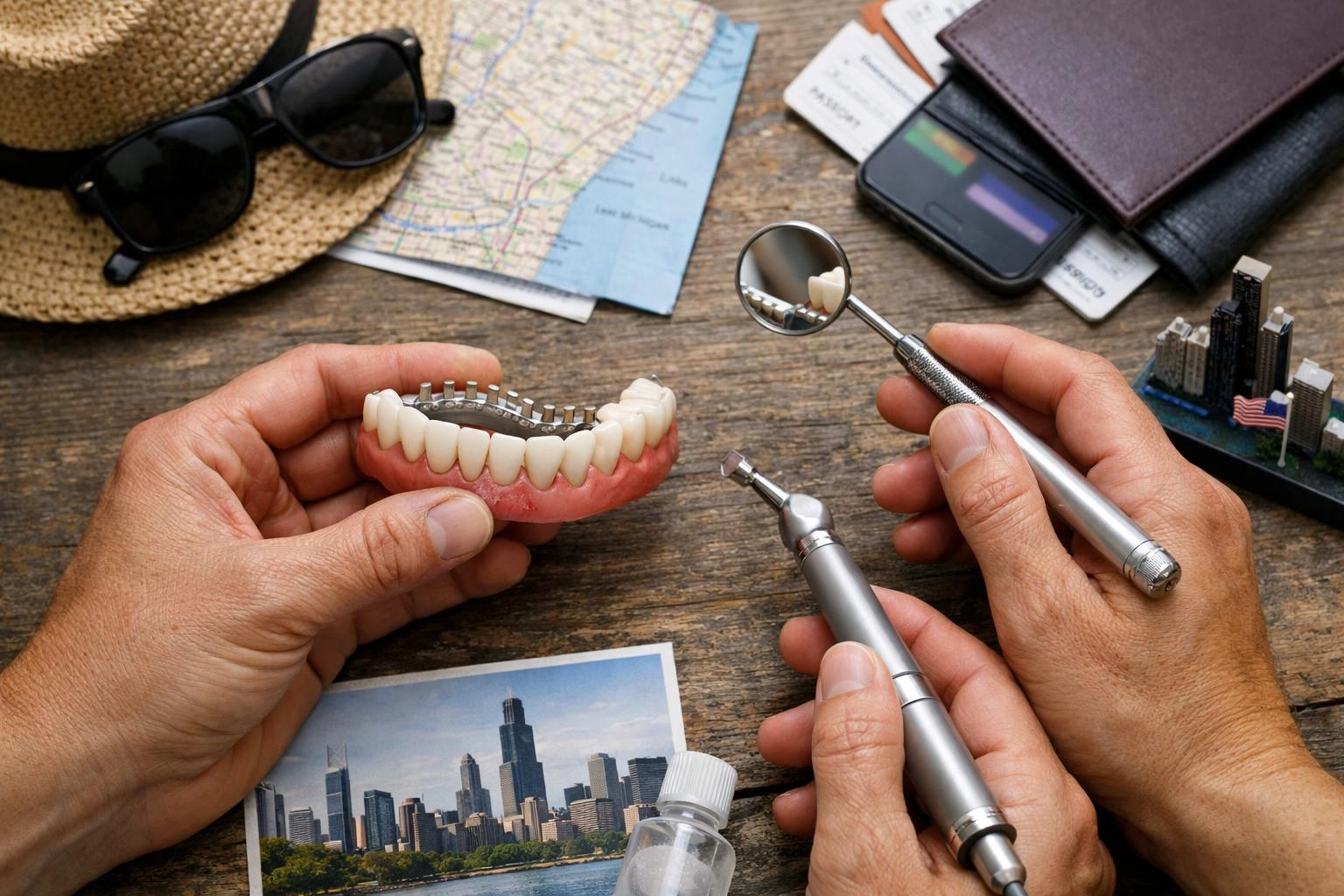
This fixed prosthesis design is one reason patients choose full mouth fixed teeth over a removable appliance. The bridge stays in place during normal use, which can boost confidence while eating and speaking. It still needs home care and professional maintenance.
If you want a true snap-out option, that’s a different treatment style. For people who want the most stable result, the fixed bridge approach is usually the better fit.
What Full Mouth Dental Implants Cost in Chicago with and Without Insurance?
Full mouth dental implants cost in Chicago varies a lot because insurance often covers only parts of the treatment, like exams, extractions, or part of the prosthesis. It usually doesn’t cover the full implant case. Without insurance, patients usually pay for surgery, temporary teeth, final teeth, imaging, and follow-up care out of pocket.
Urban dental surgery pricing in Chicago is shaped by anesthesia choices, specialist availability, prosthetic lab work, and the complexity of same-day scheduling. That means the range can grow between a simple single-arch plan and a more involved two-arch case with grafting or extractions.
| Coverage situation | What may be covered | Typical out-of-pocket cost | What drives the total |
|---|---|---|---|
| With insurance | Often exams, imaging, extractions, and sometimes part of the prosthetic materials | Usually reduced, but still meaningful because major implant and lab fees are often limited | Insurance rules, benefit caps, surgical fees, and whether the plan treats implants as major services |
| Without insurance | Typically little to no coverage for the implant case itself | Higher, because surgery, temporary prosthesis, final bridge, and follow-up are paid out of pocket | Implant count, prosthetic materials, sedation, imaging, and the number of arches treated |
| Two-arch treatment | May include more lab and surgical parts if both upper and lower arches are replaced | Usually the highest overall case cost | Arch count, complexity, and whether bone grafting or extractions are needed |
If you’re comparing full-mouth tooth replacement options, ask how the estimate splits surgical fees, prosthetic fees, and maintenance visits. That makes it easier to compare offices and see what your insurance really reduces.
One-Day Full Mouth Dental Implants Cost Drivers
One-day full mouth dental implants cost more when the case includes both arches, sedation, extractions, bone grafting, premium materials, or a more complex provisional design. Simpler single-arch cases usually cost less. They need less surgery time, fewer parts, and less lab work.
- Sedation: Deeper comfort options raise the price because they add anesthesia support and recovery resources.
- Bone grafting: Extra grafting can increase cost and lengthen healing when bone density isn’t ideal for immediate loading.
- Arch count: Treating one arch is usually less expensive than replacing both upper and lower arches.
- Prosthetic materials: Stronger or better-looking materials can raise the lab fee for the temporary bridge and final bridge.
- Tooth extraction: Removing failing teeth during the same visit adds surgery time and planning.
- Travel-aware follow-up: Patients visiting Chicago for dental tourism should budget for return checks and bite adjustments during healing.
These factors affect both immediate loading and long-term maintenance. A case that looks simple on paper can still get tricky if the bite is uneven or the prosthesis needs extra adjustment after the first fit.
Who Is a Good Candidate for Same-Day Full Arch Implants?
Good candidates for same-day full arch implants usually have enough bone for stable implant placement, controlled gum disease, and medical conditions that can safely support surgery and healing. Patients who smoke heavily, have untreated infection, or lack bone support may need staged treatment, grafting, or a different protocol.
Medical clearance matters if you have diabetes, heart disease, immune concerns, or any condition that could slow healing. The team also checks periodontal disease, because active infection can affect implant stability and osseointegration.
If you’re not a perfect candidate on day one, that doesn’t always mean no. It may just mean the plan needs more prep, like tooth extraction first, periodontal therapy, or a later implant dentistry sequence.
How Long Treatment Takes by Case Size?
Treatment time depends on the size and complexity of the case, but the same-day smile is only the first step. Small cases move faster when extractions are limited. Average cases need more coordination. Large cases may need extra visits, staged surgery, or longer healing before the final bridge.
| Case size | Typical timeline | What to expect |
|---|---|---|
| Small case | Usually the quickest path to same-day teeth and earlier follow-up | Limited extractions, simpler prosthetic design, and faster coordination with the prosthetic lab |
| Average case | Typically involves more planning, more check-ins, and a standard healing phase | Common for full-arch restoration with moderate adjustment needs |
| Large case | Often the longest because of staged care, grafting, or more complex reconstruction | May require multiple visits before the final bridge is ready |
For Chicago patients, efficient scheduling matters because winter weather and travel delays can make repeated visits harder. A clear timeline helps you plan work, recovery, and maintenance appointments without slowing healing.
Frequently Asked Questions
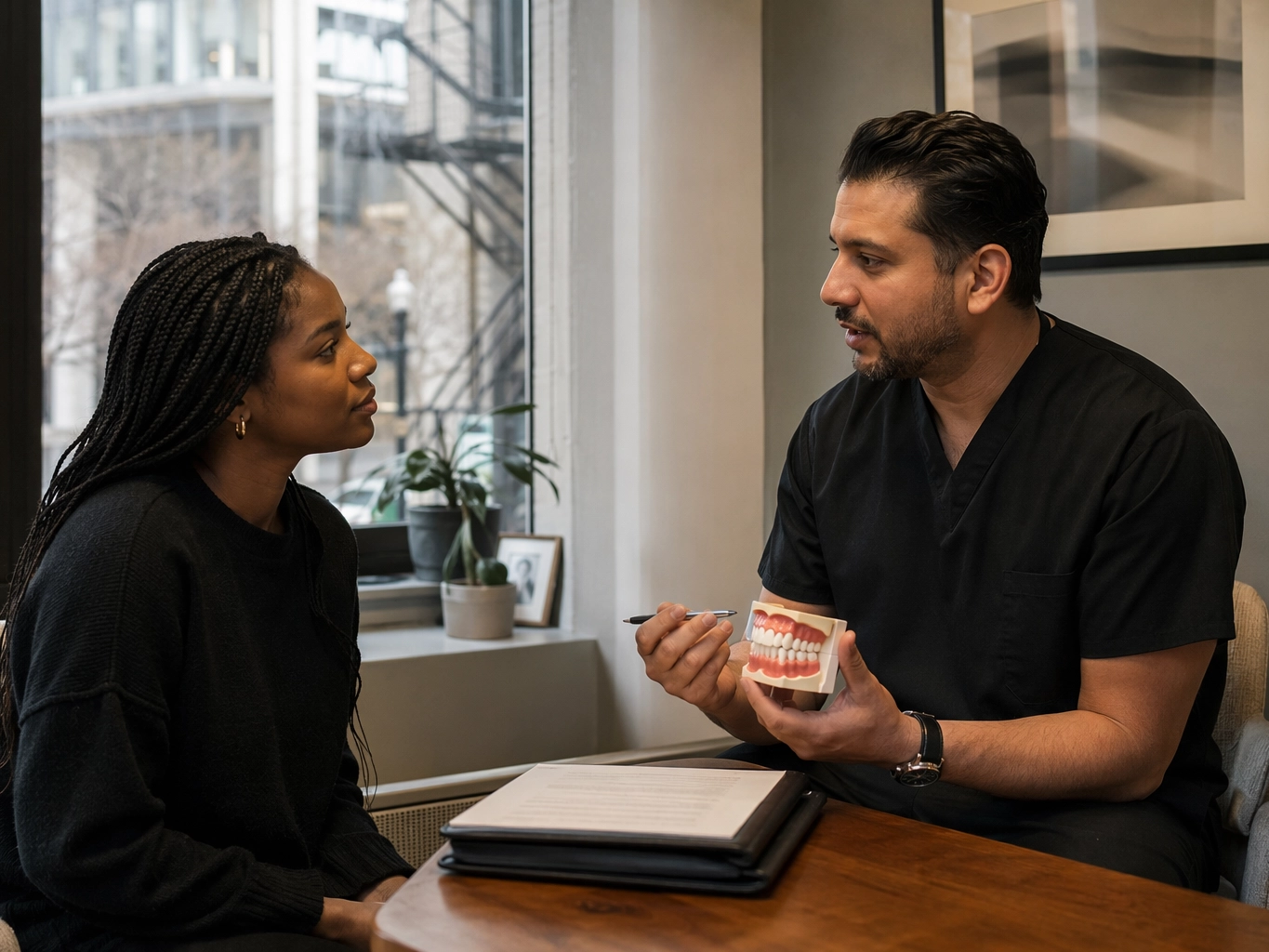
If you’re comparing full-arch dental implants in Chicago, the next step is a consultation that reviews bone support, bite, and your timeline for same-day care. A clear plan can show whether immediate loading, grafting, or staged oral surgery makes the most sense for your smile.
Get a Free EstimateSchedule your consultation to review candidacy, cost, and follow-up logistics.
Related Resources
Dental Implants Checklist Before Full-Arch Treatment
dental implants checklist before full arch treatment
What Goes With ItDental Tourism for All-on-4 and Full-Arch Implants
all on 4 dental implants in mexico
Compared ToAll-on-4 Full Arch Dental Implants
all on 4 full arch dental implants
Compared ToSingle vs Multiple Dental Implants