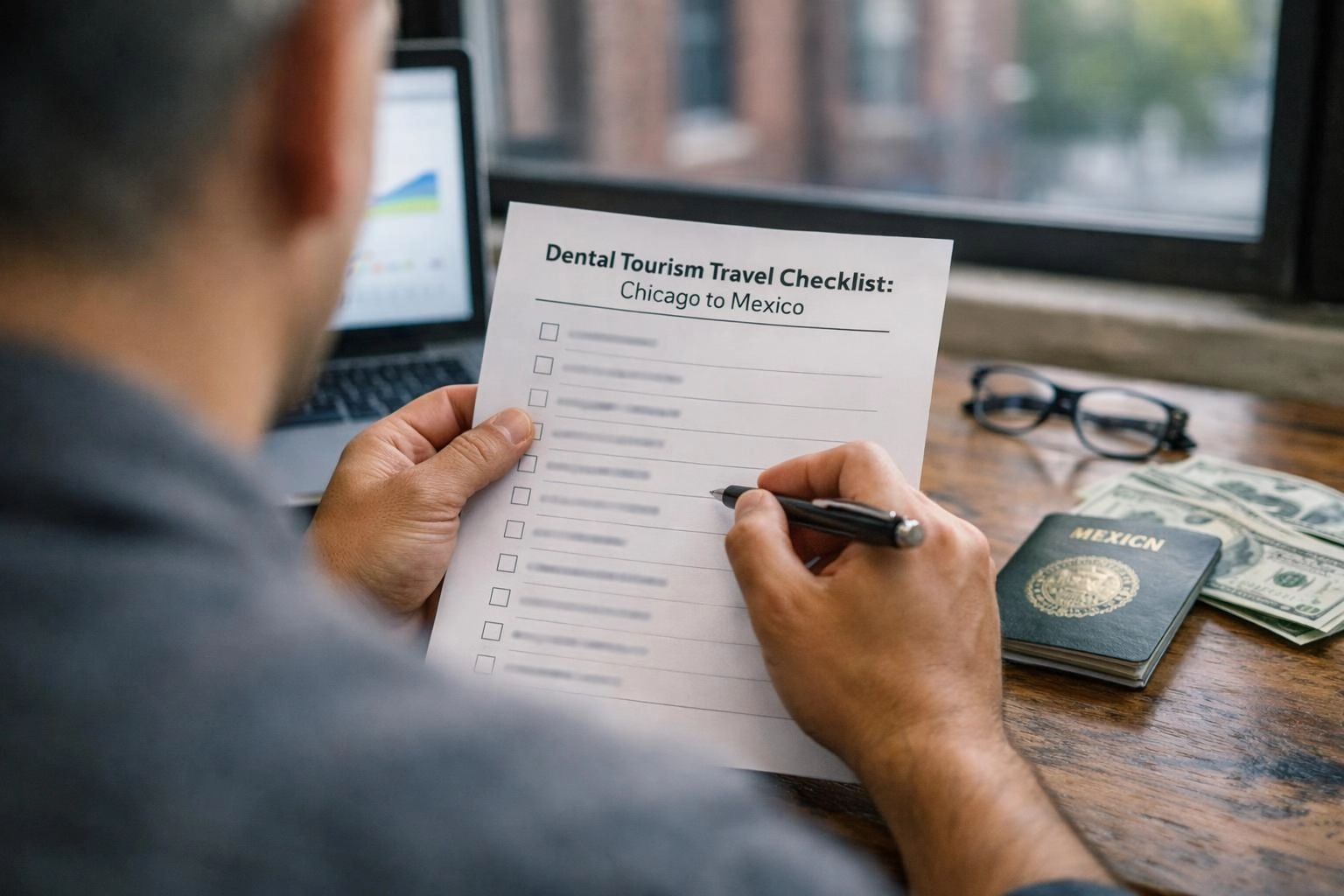
Dental Tourism Travel Checklist: Chicago to Mexico
Chicago patients should use a dental tourism travel checklist before going from Chicago to Mexico. Check the dentist’s credentials, map treatment timing, and protect the flight schedule. Pack medical documents, arrange payment and follow-up, and plan for recovery before returning home. The checklist helps reduce travel problems, compare clinics by quality, and keep aftercare organized. It also helps you finish treatment safely and return to Chicago with clear next steps.
What Should I Check Before Booking Dental Treatment in Mexico from Chicago?
Before booking, Chicago dental tourism patients should verify the clinic’s credentials, confirm treatment scope, review case photos and communication quality, and match travel dates to the planned procedure. This helps avoid mixed expectations, cuts down on rushed care, and makes the Mexico trip easier to plan from Chicago.
How Do I Compare Clinics for Quality-Focused Care?
Choose clinics the same way you would compare any healthcare logistics decision. Look for clinic verification, clear treatment plans, and proof that the dentist explains limits as well as benefits. Ask who performs each step, how the office manages infection control, and whether case review includes imaging, written estimates, and realistic healing timelines. Good clinics answer directly, do not pressure you, and show how continuity of care works if you need a change after you return.
What Travel Documents and Medical Records Should I Bring?
What Should Be on My Before-Travel Checklist from Chicago to Mexico?
Before travel, Chicago patients should book flights that match the treatment window, organize passports and treatment records, fill prescriptions, prepare payment methods, and leave time for recovery. A strong before-travel checklist lowers the risk of missed appointments, pain-control problems, and last-minute changes while in Mexico.
Good travel planning is more than airfare. It is healthcare logistics that keeps the appointment sequence intact, protects patient safety, and makes room for small schedule changes. If a clinic asks you to arrive a day early or stay longer for monitoring, that is often a sign of practical planning rather than inconvenience. A coordinated Mexico dental clinic coordination plan also helps you decide whether a return flight should be direct or whether extra buffer time is safer.
What Should I Do During the Appointment and Recovery Period?
During treatment and recovery, Chicago dental tourists should follow the clinic’s instructions exactly, track medications, keep the treated area clean, avoid strenuous activity, and confirm when it is safe to fly home. This protects healing, reduces complications, and helps the patient know when to seek help.
Most patients do best when they treat recovery like a short medical stay, not a vacation. Clear communication with the clinic lowers the chance of confusion about diet, activity, and medication timing. If the office gives written instructions, keep them with your passport and records so you can review them at the hotel and again before the flight home. This is especially useful when treatment happens abroad, because continuity of care depends on organized notes and fast contact.
What Are the Red Flags I Should Not Ignore?
How Should I Plan Follow-Up Care After Returning to Chicago?
After returning to Chicago, patients should schedule follow-up support, save treatment notes and imaging, monitor healing, and know which provider to contact if something changes. Follow-up planning keeps Mexico treatment connected to Chicago care, which is especially important for restorations, implants, and any delayed symptoms.
Chicago patients often need a clear handoff plan to a local provider after returning, because continuity of care is harder when treatment happens out of state or abroad. A practical handoff means your records are readable, your questions are logged, and your local dentist knows what was done. That is the difference between a one-time trip and a safe healthcare plan that continues after the flight home.
Frequently Asked Questions
Related Resources
Dental Tourism Checklist: What to Do Before Going to Mexico for Treatment
dental tourism checklist before going to mexico
What's RequiredDental Implants Checklist Before Full-Arch Treatment
dental implants checklist before full arch treatment
What's RequiredFull Mouth Reconstruction Checklist Before Treatment