Single vs Multiple Dental Implants in Chicago, IL
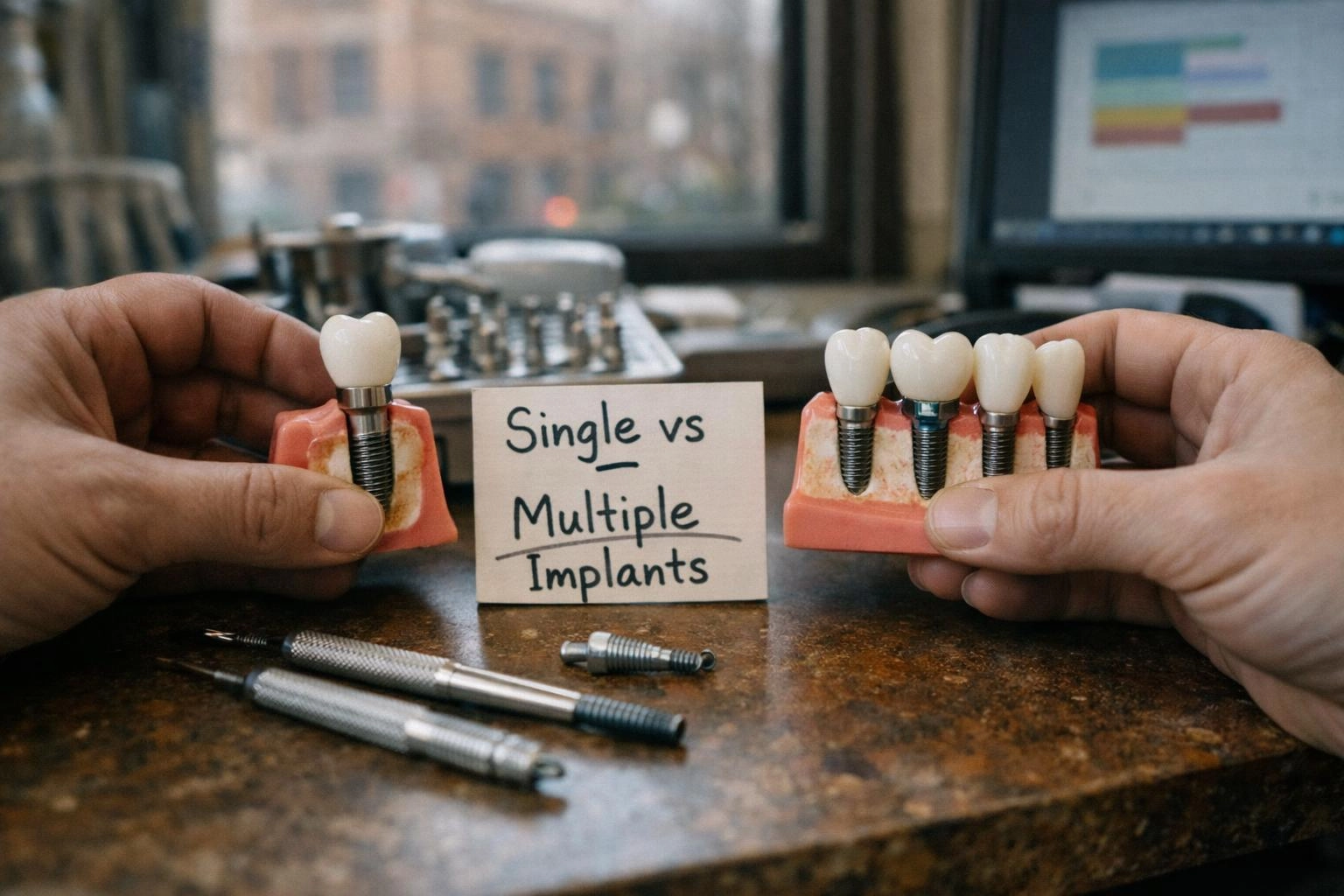
Single dental implants replace one missing tooth with one implant. Multiple dental implants replace several teeth with separate implants, an implant-supported bridge, or full-arch solutions like All-on-4. In Chicago, the right choice depends on how many teeth are missing, bone volume, bite forces, and budget. If you need several teeth restored, multiple implants can often be placed at the same time when bone health allows, But your dentist may recommend staged treatment or using All-on-4 for efficiency.
Single dental implants work best for one missing tooth and a small, separate repair. Multiple dental implants fit better when several nearby teeth are gone or when support has to cover a wider area. In Chicago, the right choice depends on spacing, bone health, esthetics, and whether you need a simple replacement or a broader arch-level solution.
Single vs Multiple Dental Implants: Which Option Fits Your Smile?
A single dental implant uses one implant fixture, one abutment, and one dental crown to replace one tooth without reshaping the adjacent teeth. That makes it a strong choice when the neighboring teeth are healthy and you want a replacement that feels stable and natural. A multiple dental implants plan works better when two or more teeth are missing, the bite force is higher, or the space needs broader support.
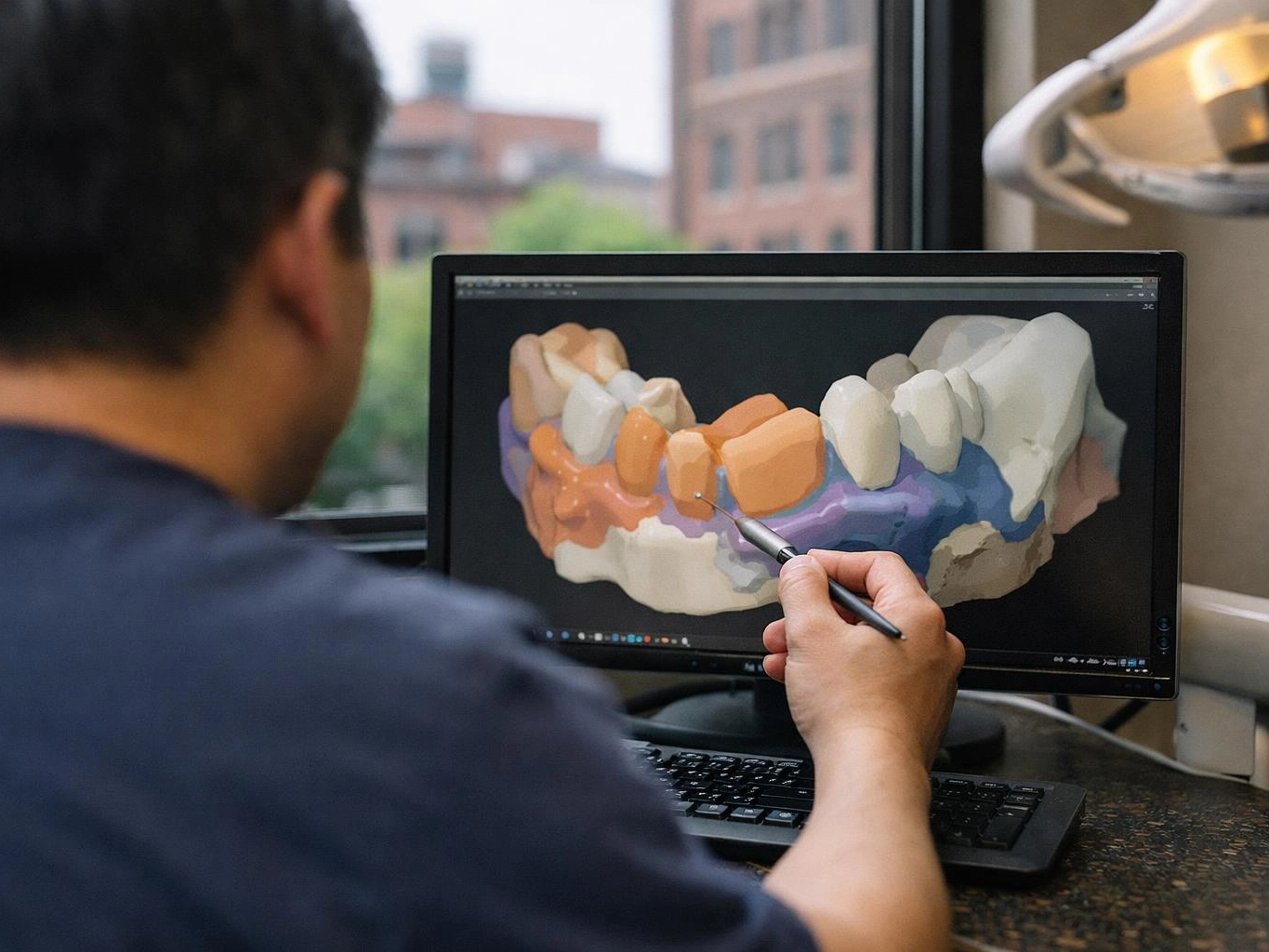
For patients in Chicago, IL, the decision often comes down to bone density, jawbone shape, periodontal health, and how many visits you can manage. A single implant may be simpler, but a multi-tooth plan can be more efficient if several teeth are failing together. In many cases, prosthodontic planning and 3D imaging help map where each implant post should go so the prosthetic tooth or bridge fits cleanly.
If the missing teeth are separated, one implant tooth replacement may work well on its own. If the teeth are next to each Other, an implant-supported bridge may reduce the number of implants needed while still protecting adjacent teeth. If the problem is a worn or failing arch, full-arch restoration options can create a more complete and durable result.
Multiple dental implants can often be placed in one appointment when gum health, bone support, and surgical planning make it predictable. Dentists may place two, three, or more implants at the same time to reduce visits and speed restoration, But they may stage treatment if grafting, infection control, or bite management is needed.
Can You Get Multiple Dental Implants at Once?
Yes, multiple implants at once are often possible when the mouth is stable enough for surgery. If the bone density is solid and the implant fixture positions are well planned, same-day implant placement can save time and reduce the number of appointments. That is especially helpful for busy adults who want a faster path to restoration.
Dentists may still stage care if bone grafting is needed, if an infection must clear first, or if the bite force on the new work would be too high right away. In some cases, an oral surgeon places the implants first and the restorative team completes the crowns or bridge later after osseointegration has taken place. In Chicago winter weather, staged visits and post-op travel planning can matter, since icy conditions may make recovery trips harder.
For patients traveling from downtown or the wider metro area, consolidating surgical visits can be a real advantage. Still, the safest plan is the one that matches your jawbone, your health, and your timeline.
Multiple dental implants usually cost more than a single implant because each added tooth replacement can bring more surgical time, more parts, and more restorative work. In Chicago, total cost depends on the number of implants, whether bone grafting is needed, and whether the treatment uses individual crowns, an implant bridge, or a full-arch design.
How Much Do Multiple Dental Implants Cost in Chicago?
| Cost factor | Typical range or influence | What it changes |
|---|---|---|
| Implant cost | Usually rises with each added implant | More surgical time, more parts, and more planning |
| Abutment | Often billed per implant or per restoration unit | Connects the implant fixture to the crown or bridge |
| Crown | Usually needed for each visible replacement tooth | Adds lab work and final esthetic shaping |
| Bone grafting | May add cost when jawbone support is limited | Helps support osseointegration and long-term stability |
| Chicago pricing | Can vary by provider, imaging, and restoration type | Downtown access, parking, and fewer visits can affect total value |
Most multi-tooth plans cost less than replacing every tooth separately if an implant-supported bridge is possible. Still, they usually cost more than a single site. Typical pricing depends on whether you need bone grafting, a prosthodontic plan, or an arch-level solution. For many Chicago patients, consolidating care can reduce travel burden even when the upfront implant cost is higher.
A single implant is ideal for one missing tooth, a bridge can replace several teeth faster when adjacent teeth need support, and All-on-4 is designed for patients replacing a full arch or many failing teeth at once. The best option balances healthy tooth preservation, cost, treatment time, and long-term maintenance.
Quick Comparison: Single Implant vs Bridge vs All-on-4
| Factor | Option A | Option B |
|---|---|---|
| Cost | Single implant often has the lowest cost for one tooth, but still includes the implant post, abutment, and crown | Bridge or All-on-4 may spread cost across more teeth or a full arch, which can be efficient for larger cases |
| Timeline | Single-tooth implant treatment often needs healing before the final crown is attached | Bridge can be faster, while All-on-4 may shorten the path to a fixed full-arch restoration |
| Maintenance | Implants need daily cleaning around the crown and gumline | Bridges and full-arch restorations need careful hygiene under and around the prosthetic tooth or framework |
| Best-for | One missing tooth with healthy adjacent teeth | Several missing teeth, a wider bite challenge, or a full-arch restoration need |
Single implant vs bridge is usually a choice between preserving neighboring teeth and speeding up restoration. Single implant vs all on 4 becomes a bigger decision when many teeth are failing, because All-on-4 dental implants can support a full-arch fixed restoration with fewer implants than a tooth-by-tooth plan. In many cases, the smartest path is the one that best protects healthy tissue while keeping treatment realistic.
Single dental implants preserve neighboring teeth, provide strong chewing function, and usually look and feel the most natural for one missing tooth. The tradeoff is that they can be more expensive than a bridge for one site and may require enough bone volume and healing time before the final crown is attached.
Pros and Cons of Single Dental Implants
Single-tooth implant treatment is a common choice when the goal is to replace one tooth without changing the rest of the smile. It can help protect adjacent teeth because no crowns need to be placed on them, and once osseointegration is complete, the restoration is usually very stable.
Pros
Cons
Multiple dental implants can restore several missing teeth with excellent stability, spread bite forces well, and avoid preparing healthy nearby teeth. The downside is higher upfront planning, possible grafting, and more complex hygiene and maintenance, especially when implants are close together or when the treatment spans a wider section of the arch.
Pros and Cons of Multiple Dental Implants
Multiple-tooth implants are a good fit when several teeth are gone, when a bridge would put too much stress on nearby structures, or when the goal is a broader full-arch restoration. Careful prosthetic planning helps avoid implant overload and keeps the restorations balanced over time.
Pros
Cons
Dentists choose between a bridge, multiple implants, or All-on-4 by reviewing the number of missing teeth, x-rays or 3D imaging, bone quality, bite alignment, and whether you want a fixed or removable-feeling result. The decision also depends on whether preserving adjacent teeth or restoring an entire arch is the higher priority.
How Dentists Decide Between a Bridge, Multiple Implants, or All-on-4?
In Chicago, efficient planning matters because downtown parking, transit access, and appointment consolidation can affect how realistic a multi-visit case feels. For many adults seeking full-mouth rehabilitation, fewer trips can be a major advantage, especially when winter weather makes travel less convenient.
Frequently Asked Questions
If you are comparing tooth replacement options, a consultation can clarify whether a single implant, multiple implants, or All-on-4 dental implants is the smarter path for your smile. For personalized treatment planning and to review imaging, healing time, and restoration choices, contact us through our consultation page.
Related Resources
Dental Implants Checklist Before Full-Arch Treatment
dental implants checklist before full arch treatment
What Goes With ItDental Tourism and Dental Implants in Mexico
dental tourism for dental implants in mexico
What Goes With ItDental Tourism for All-on-4 and Full-Arch Implants
all on 4 dental implants in mexico
What It CostsFull Mouth Reconstruction Cost