
Newest Dental Implant Techniques for Chicago Patients
The newest dental implant technique is often guided surgery or digital implant planning. It may also use immediate-load protocols or All-on-4 treatment when bone support allows it. In Chicago, the best choice depends on bone density, gum health, and which jaw needs treatment. A local implant specialist can confirm candidacy and lower risk.
Chicago patients often do best with careful planning, and the newest dental implant technique is usually digital implant planning with guided surgery. In many cases, the real upgrade is better imaging, cleaner prosthetic design, and more exact implant placement. That can improve fit, healing, and long-term comfort.
Guided implant surgery uses a CBCT scan and digital records to map bone, nerves, and gum shape before placement. The plan helps the surgeon choose the safest angle and depth, which matters for both the maxilla and the mandible. When bone density is good and the bite is controlled, the team may also consider immediate load, where a temporary prosthesis is placed sooner.
In Chicago, IL, dental implant consultation is often about timing as much as surgery. Busy city schedules can favor fewer visits when the case allows it, so digital workflows can help. Chicago winters can also affect appointment timing and post-op travel plans, which makes a clear treatment calendar important. The right approach is the one that protects osseointegration, supports hygiene, and fits your anatomy.
Quick Answers About Modern Dental Implant Options
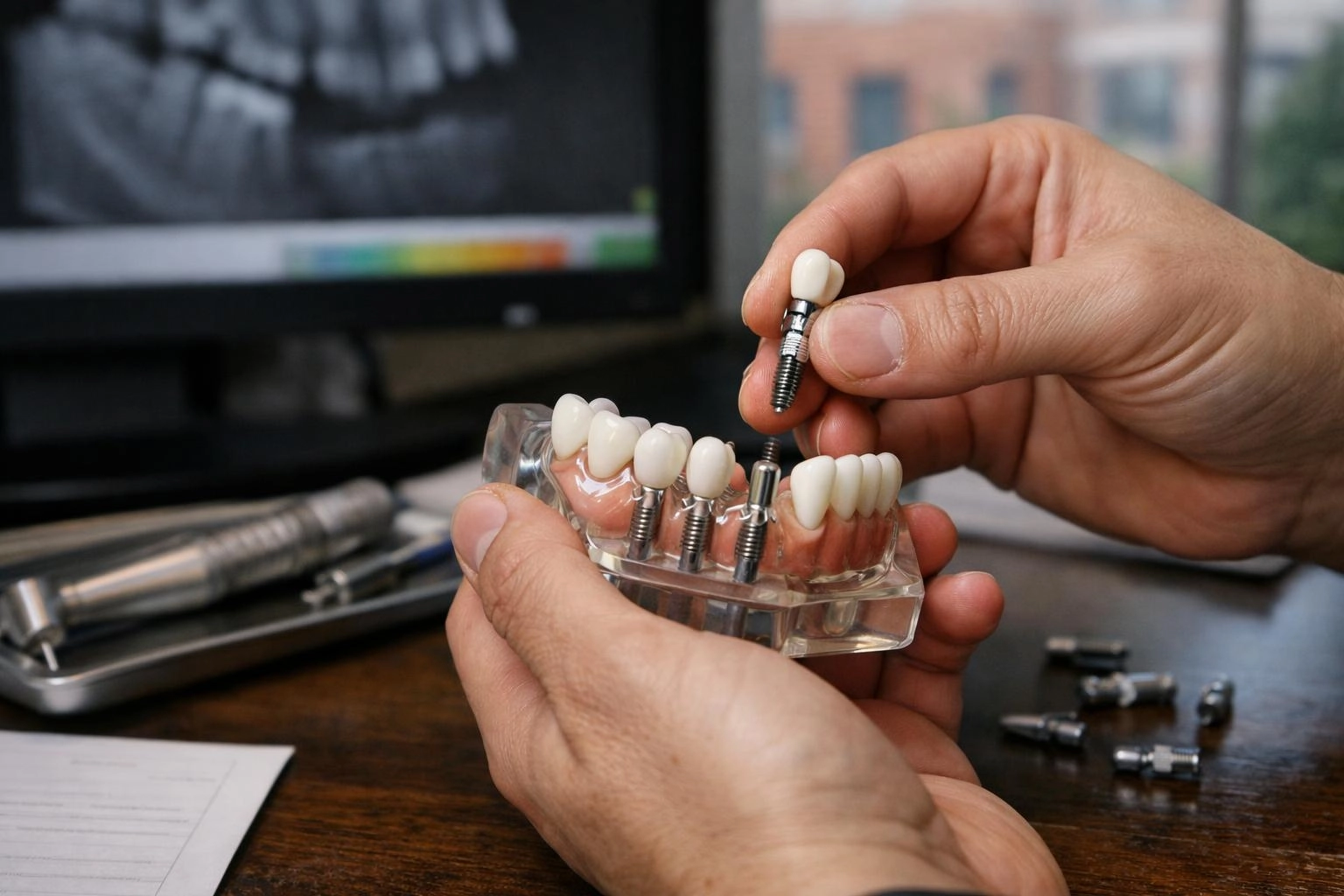
Modern implant dentistry in Chicago includes single dental implants, multiple dental implants, All-on-4 implants, and full-arch dental implants. The right choice depends on bone volume, oral health, and how many teeth need replacement. A quick Chicago implant consultation with imaging can show whether you qualify for immediate loading or need staged treatment first.
| Option | Best for | Typical planning focus |
|---|---|---|
| Single dental implants | One missing tooth | Bone support, spacing, and a natural-looking crown |
| Multiple dental implants | Several missing teeth | Load sharing, prosthetic design, and hygiene access |
| All-on-4 implants | Full-arch replacement with fewer fixtures | Angle planning, bite control, and immediate-load stability |
| Full-arch dental implants | Most or all teeth in one arch | Occlusion, maintenance, and long-term prosthesis access |
Do You Qualify for a Newer Implant Approach?
You may qualify for newer implant approaches if your gums are healthy, your bone can support an implant, and your medical risks are controlled. Conditions like active gum disease, heavy smoking, poor bone quality, or unmanaged systemic issues can call for grafting, healing time, or a different treatment plan.
What Is the 3-2 Rule for Dental Implants?
The 3-2 rule for dental implants is a spacing and planning guide. It supports good prosthetic design, hygiene access, and load distribution. In practice, implant placement must respect nearby teeth, bone anatomy, and the final restoration so the case stays stable and cleanable.
Many clinicians use the rule as a memory aid, not a strict law. The main idea is that implant spacing should protect the papilla, leave room for the restoration, and avoid crowding the implant fixture or abutment. That matters because prosthetic support depends on function and cleaning access, especially with a bridge or full-arch restoration.
For Chicago patients, this becomes a planning issue, not just a surgical one. A case that looks simple may need more room, bone grafting, or a different restoration shape after digital implant planning. Good design lowers the chance of implant failure, and it helps with maintenance after surgery.
Why Do Dental Implants Fail Most Often in the Upper Jaw?
Dental implants fail most often in the upper jaw because the maxilla has softer, less dense bone. That bone does not anchor implants as well as the mandible. So jaw location is a major risk factor Chicago patients should discuss before treatment.
| Jaw location | Typical risk pattern | Planning concern |
|---|---|---|
| Upper jaw maxilla | Higher failure risk in typical cases | Softer bone, sinus limits, and less initial grip |
| Lower jaw mandible | Lower failure risk in typical cases | Usually denser bone and stronger early stability |
What Is the Number One Reason Dental Implants Fail?
The number one reason dental implants fail is usually failed osseointegration. It is often linked to infection, poor bone quality, or overloading during healing. If the implant cannot fuse securely with bone, it becomes unstable. In Chicago cases, careful planning, hygiene, and follow-up lower the chance of early failure.
What Is the Downside of Full Mouth Dental Implants?
The downside of full mouth dental implants is that they’re more complex, more maintenance-sensitive, and less forgiving of poor bone, bite forces, or hygiene lapses than a single implant. Chicago patients also need to know that the restoration may need staged care, regular adjustments, and long-term cleaning discipline.
Systems like All-on-4 can be efficient, but they still depend on a stable foundation, healthy soft tissue, and a balanced occlusion. If the bite is too heavy or the prosthesis isn’t kept clean, problems can build over time. The restoration may also need repairs, relines, or screw checks, especially after the first healing phase.
Local access matters too. In a city with winter travel issues and busy schedules, maintenance visits should be easy to keep. That’s why many Chicago patients prefer a plan that combines digital implant planning, fewer appointments, and clear home care steps. A strong start helps, but long-term success depends on follow-through.
What Disqualifies You from Getting Dental Implants?
You can be disqualified from dental implants by active gum disease, insufficient bone support, uncontrolled systemic disease, or habits that impair healing such as heavy smoking. Many patients are not permanent no’s; they may become eligible after periodontal treatment, bone grafting, or medical stabilization.
For many Chicago patients, the first visit is about candidacy screening, not rejection. A local implant specialist can use imaging, medical review, and gum health evaluation to decide whether you need staged care or can move forward with guided surgery. That process helps match the treatment to your bone density and lifestyle.
Frequently Asked Questions
Modern Techniques and Candidacy
The newest dental implant technique is usually digital implant planning with guided surgery, sometimes combined with immediate-load restoration. The best option depends on bone density, gum health, and bite forces, not just the newest label.
Failure, Risk, and Longevity
The 3-2 rule is a planning guide for spacing and support so the prosthesis fits well, cleans well, and shares load properly. It helps the team choose implant placement that protects the final restoration.
Recovery, Discomfort, and Local Planning
The main downsides are complexity, maintenance, and bite sensitivity. Full-arch restoration can work well, but it needs regular follow-up and strong home care to protect the prosthesis and supporting tissues.
Schedule a Chicago implant consultation to review imaging, bone support, and the best treatment path for your mouth.
Related Resources
Dental Implants Checklist Before Full-Arch Treatment
dental implants checklist before full arch treatment
What Goes With ItDental Tourism and Dental Implants in Mexico
dental tourism for dental implants in mexico
What Goes With ItDental Tourism for All-on-4 and Full-Arch Implants
all on 4 dental implants in mexico
Compared ToAll-on-4 Full Arch Dental Implants
all on 4 full arch dental implants