Porcelain Veneers Process in Chicago, IL
The porcelain veneers process starts with a consultation, smile design, tooth preparation, impressions or digital scans, temporary veneers, lab work, and final bonding. In Chicago, IL, it usually takes two visits, but timing can change with more complex cases or bite adjustments. It can improve shape, color, and symmetry while keeping most tooth structure. Still, it’s irreversible because a thin layer of enamel is usually removed.
How the Porcelain Veneers Process Works in Chicago?
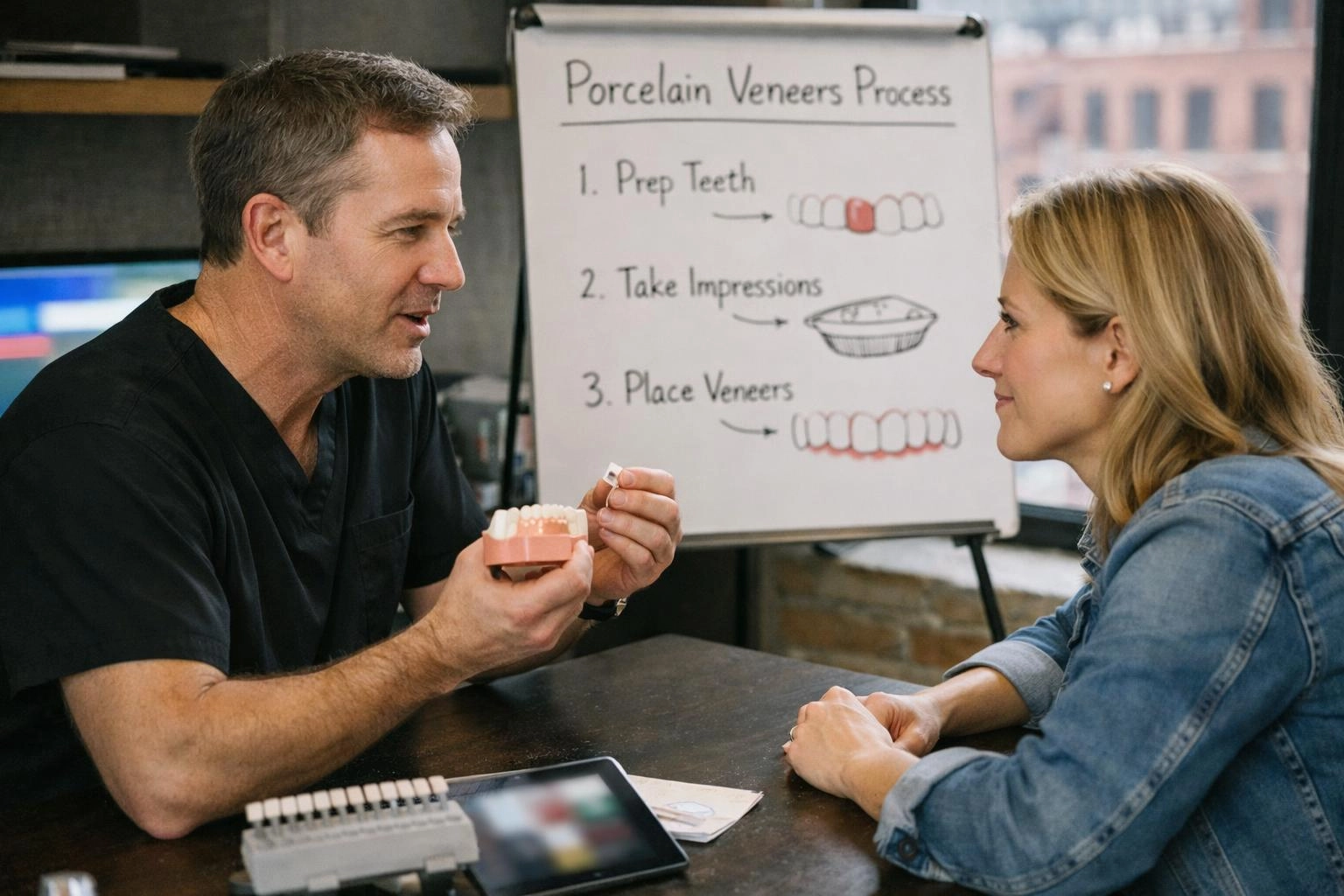
Porcelain veneers are placed through a planned cosmetic process that starts with a consultation, moves to tooth preparation and impressions, and ends with custom bonding. In Chicago, the process usually takes two visits, and each step helps match your bite, shade, and facial balance.
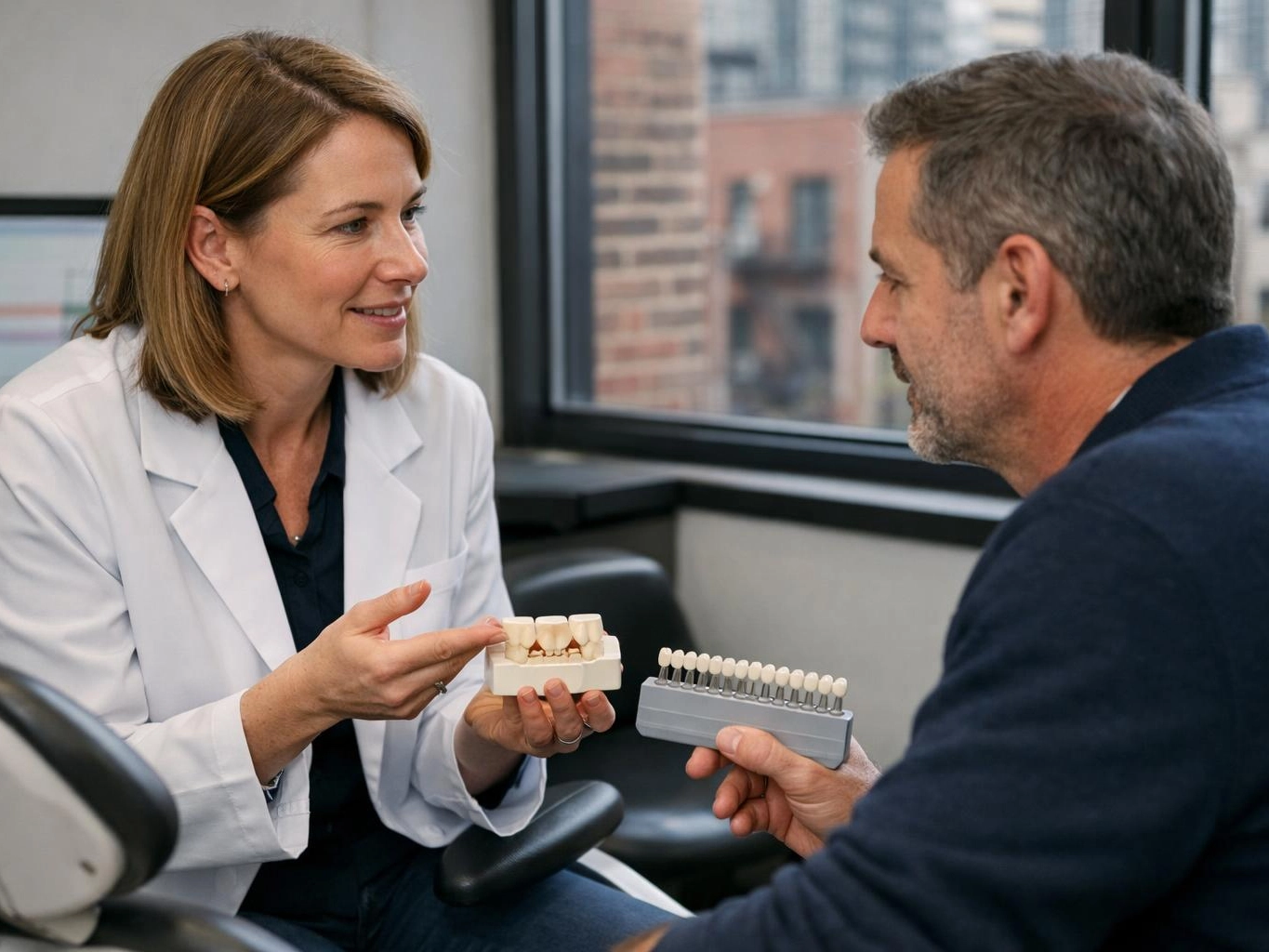
A cosmetic dentist first checks your goals, photos, and oral health to see whether porcelain dental restorations are a good fit. That visit often includes smile design, shade matching, and a talk about the look you want, from subtle custom shade veneers to a brighter smile makeover. Many Chicago cosmetic dentistry patients also compare this option with tooth whitening, gum contouring, and bite alignment, so the plan should fit both appearance and function.
Next comes tooth preparation, which usually means enamel reduction on the front surface so the shell sits flush and looks natural. The office then takes digital impressions or traditional molds, sends the case to a dental laboratory, and places temporary veneers or Other temporary restorations while the lab makes the final ceramic restoration. This workflow matters in Chicago, IL because cross-city scheduling and commute time can make digital planning more convenient for busy patients.
At the final visit, the dentist checks fit, color, and any bite adjustment, then completes final bonding with bonding cement. The result should look like natural tooth veneers, not oversized shells. For many patients, especially those booking around lakefront-season events or social gatherings, predictable timing helps them plan the visits without too much disruption.
Porcelain Veneers Before and After: What Changes to Expect
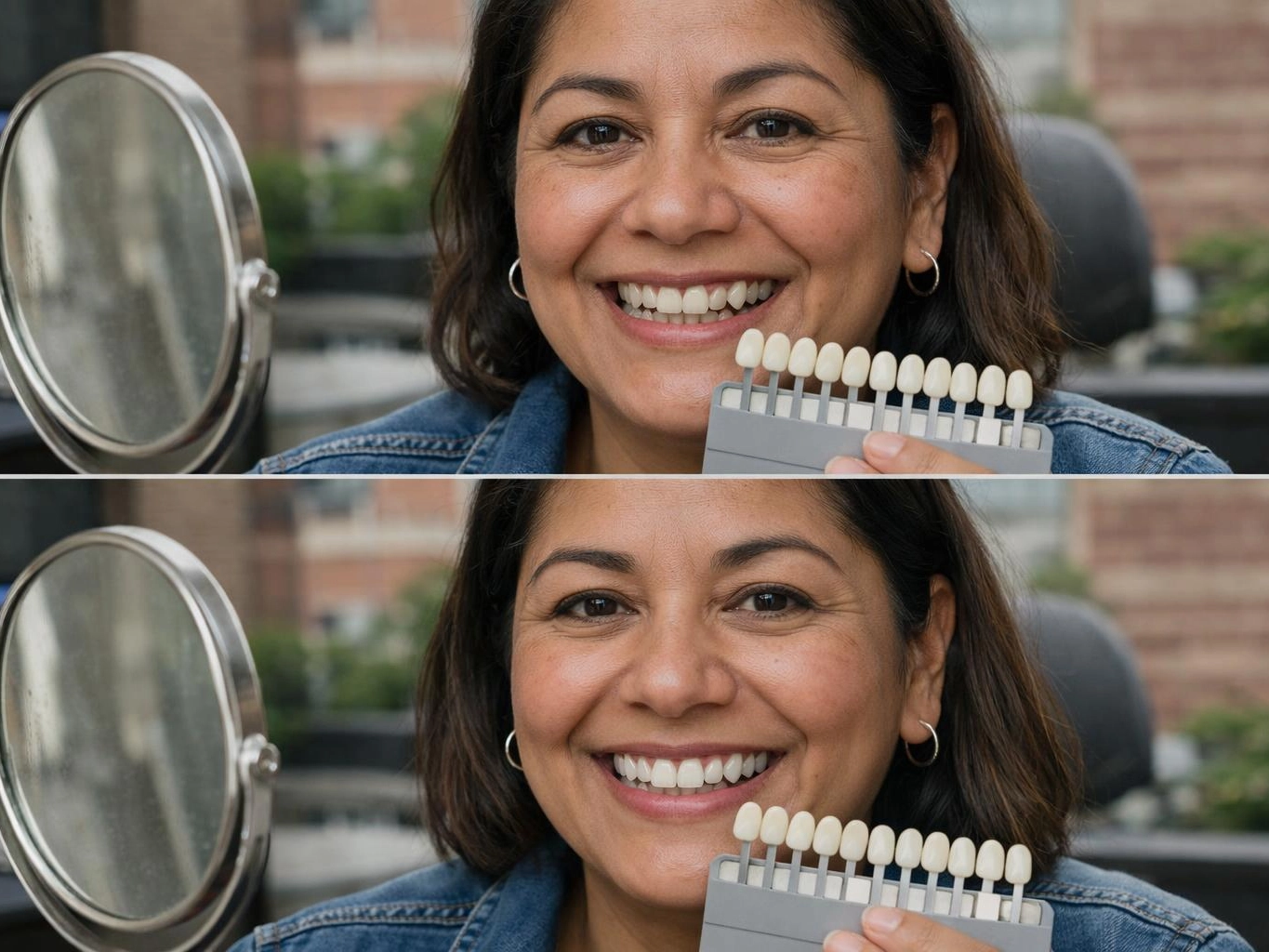
Porcelain veneers before and after results usually show brighter color, better symmetry, and a more even tooth line. The biggest changes come from fixing worn edges, stains, gaps, and small alignment issues while keeping the smile natural-looking instead of too white or bulky.
Can I Bite into an Apple with Veneers?
Porcelain veneers can handle normal biting and chewing, including biting into many everyday foods, but it’s safer not to use them on very hard items. Apples are usually fine when cut or bitten carefully, while ice, hard candy, and bones raise the risk of chipping.
Bite force is part of the decision, because veneer durability depends on how hard and how often the front teeth are loaded. Normal diet limits are mild: most patients can eat well, but they should avoid cracking nutshells, opening packages, or chewing on pens. If you grind at night or clench during stress, a guard can help protect the ceramic restoration.
How Long Do Porcelain Veneers Last?
Porcelain veneers commonly last many years when they’re bonded well and cared for with good oral hygiene, regular checkups, and protection from grinding. Their lifespan depends on bite forces, habits like nail biting, and whether the teeth are protected from clenching or trauma.
Longevity depends on daily care, the quality of the porcelain restoration, and how well the edges are sealed. Most patients help them last longer with routine maintenance, gentle brushing, flossing, and follow-up visits after final bonding. In Chicago, winter dryness and indoor heating can make the mouth feel drier, so some people notice more short-term sensitivity after prep and bonding. That doesn’t usually mean the veneers are failing; it just means the teeth may need time to settle.
Good maintenance also means avoiding hard habits and keeping up with checkups. If bite adjustment is needed later, fixing a small issue early can help the veneer set stay stable for longer.
What Happens to Teeth Under Veneers?
Teeth under veneers usually have a small amount of enamel removed so the veneer fits properly and looks natural. The tooth is then covered by the bonded ceramic shell, which protects the front surface, but the restoration still depends on healthy underlying teeth and gums.
Enamel reduction is usually limited, but it’s still real and permanent. The prepared tooth may expose a bit of dentin, which can cause short-term tooth sensitivity before the final bond settles. Once the veneer is placed, the front face is covered, but the tooth still needs clean gums, healthy support, and routine care.
This is why dentists talk through candidacy before treatment. A veneer is a cosmetic cover, not a cure for decay or gum disease. If the underlying tooth is not stable, the result won’t last as well, even if the outer shell looks excellent.
How Painful Is Getting Porcelain Veneers?
Getting porcelain veneers is usually not very painful because dentists use local anesthesia during tooth preparation, and most patients feel pressure rather than pain. Mild sensitivity can happen after preparation or after bonding, but it’s usually temporary and manageable with normal aftercare.
Local anesthesia makes the appointment easier, especially during the tooth preparation visit. Some people feel brief sensitivity when the enamel is reshaped or after the temporary veneers are placed. In Chicago winter conditions, dry indoor heat can make that sensitivity feel more noticeable for a short time, so dentists often give practical comfort tips such as avoiding very hot or very cold foods right away.
If your bite is uneven, a small bite adjustment may be needed at the end of the visit. That usually improves comfort rather than causing pain, and most patients return to normal routines quickly.
What I Wish I Knew Before Getting Veneers?
Before getting veneers, it helps to know the treatment is irreversible, needs ongoing care, and may need replacement later. Patients often wish they had understood the limits around severe grinding, the importance of shade selection, and the fact that veneers improve appearance more than they change oral health.
How Long the Treatment Takes from Consultation to Final Bonding?
| Step | What happens | Typical timing |
|---|---|---|
| Consultation | Review goals, exam, shade matching, and smile design | One visit |
| Preparation visit | Tooth preparation, digital impressions, and temporary veneers | One visit |
| Lab fabrication | Dental laboratory creates the ceramic restorations | Commonly between visits |
| Final bonding | Try-in, bite adjustment, and final bonding | One visit |
For most people, the treatment timeline is short enough to fit around work and commute needs, but dental lab turnaround and bite refinement can change the pace. A cosmetic dentist may also space visits farther apart if scheduling across Chicago adds travel time or if temporary veneers need a little extra wear time.
Typical Veneer Timeline by Case Size
| Case size | Typical duration | What usually affects timing |
|---|---|---|
| Small case | About 2 visits over a short span | Fewer teeth, simpler shade matching, limited bite adjustment |
| Average case | Usually 2 to 3 visits | More teeth, detailed digital planning, and standard laboratory fabrication |
| Large case | Often several weeks from start to finish | Complex smile design, extra records, and additional bite adjustment |
These are typical ranges, not guarantees. Larger cosmetic projects can take longer when the goal is precise tooth shape, natural translucency, and coordinated scheduling with the dental laboratory. In a busy city like Chicago, predictable planning is often just as important as speed.
Frequently Asked Questions
To plan a visit, use this contact page and ask about digital planning, timing, and appointment availability.